
17 Things to Do in Algonquin Park (#10 May Surprise You!)
Algonquin Provincial Park is one of my favourite places to go camping in Ontario.
With thousands of lakes, hundreds of kilometres of trails, and plenty of opportunities to see wildlife, it’s no surprise that we keep coming back.
But there’s a lot more to Algonquin than hiking and canoeing. You can learn about the park’s logging history, enjoy a meal at a restaurant, or even stop for ice cream.
And while many of Algonquin’s most popular attractions are located along the Highway 60 corridor, some of our favourite experiences have been in other parts of the park.
From outdoor adventures to some unexpected attractions, here are 17 things to do in Algonquin Park during your next visit.
1. Go Hiking
Hiking is one of our favourite things to do in Algonquin Park, and we’ve tackled quite a few of its trails over the years.
Some of our favourites include the Lookout Trail, which offers incredible views for relatively little effort, and Booth’s Rock Trail near Rock Lake, where you’ll find some pretty spectacular views of the lake and surrounding forest.
I’ve covered these and several others in my guide to the best hiking trails in Algonquin Park.
For something a little more challenging, Centennial Ridges and Track and Tower are both worth considering.

We’ve hiked both, and while they definitely gave us a workout, the views were well worth the effort!
But don’t limit yourself to Highway 60. The Brent Crater Trail, located near Brent Campground in the northern part of the park, takes you to the site of an ancient meteorite impact crater.
My tip: Don’t let a trail’s difficulty rating scare you off. We’ve found that some of Algonquin’s more challenging trails are rated that way because of their length or steep climbs, rather than technical difficulty. Just be sure to choose a hike that suits your abilities.
2. Explore Algonquin by Bike
Hiking isn’t the only way to explore Algonquin’s forests. Bringing your bike is another great way to cover more ground while enjoying the outdoors.
Hiking isn’t the only way to explore Algonquin’s forests. Bringing your bike is a great way to cover more ground while enjoying the park.
The Old Railway Bike Trail is one of the most popular cycling routes in Algonquin. This 16-kilometre trail follows a former railway line, passing through forests, wetlands, and alongside several lakes.
John and I rode pretty much the entire trail while camping at Mew Lake, and it’s a great ride. The trail is relatively flat, making it a good option for families.
You can also access it from several locations, including Pog Lake and Mew Lake campgrounds, so there’s no need to tackle all 16 kilometres in one go.
For more experienced cyclists, the Minnesing Mountain Bike Trail, located near Canisbay Lake Campground at kilometre 23, offers a more challenging ride.
The trail has several loops with steep hills, rocky sections, exposed roots, and muddy terrain.
My tip: The Old Railway Bike Trail is shared with walkers and other visitors. Keep an eye out for people and wildlife, particularly around bends and narrower sections.
3. Go Swimming
After a morning of hiking or biking, there’s nothing better than cooling off in one of Algonquin’s many lakes.
Most of the park’s developed campgrounds have sandy beaches, so you won’t have to go far for a swim if you’re camping.
And if you’re just visiting for the day, there are several day-use beaches to choose from as well.
Lake of Two Rivers is one of the most popular swimming spots in the park, with a large sandy beach that’s particularly popular with families.
Canisbay Lake is another great option, with both a campground beach and a separate day-use beach.
But swimming isn’t just a summer activity for everyone! Our boys have made a tradition of jumping into Rock Lake during our annual Thanksgiving weekend camping trip.
Considering how cold the water can be in October, I’m more than happy to watch from shore!
My tip: Algonquin’s beaches are unsupervised, so there are no lifeguards on duty. Keep a close eye on children and check the water conditions before heading in.
4. Get Out on the Water
With more than 2,000 lakes and an extensive network of rivers and canoe routes, it’s no surprise that paddling is one of the most popular activities in Algonquin Park.
While canoeing is probably what most people associate with Algonquin, kayaking and stand-up paddleboarding are also great ways to explore the park’s waterways.
In fact, heading out on our paddleboards is John’s and my favourite thing to do while camping. And Algonquin has quickly become our favourite place to paddle!
The water is incredibly clean and clear, and the shorelines are beautiful. We can easily spend hours exploring the lakes.
Some popular paddling destinations include Canoe Lake, Lake of Two Rivers, and Rock Lake.
We’ve also enjoyed paddling on Kioshkokwi Lake near Kiosk Campground, which is a great option for exploring the northern part of the park.
And you don’t need to plan a multi-day canoe trip to enjoy Algonquin from the water.
Many of the park’s lakes are accessible from campgrounds and day-use areas, making it possible to head out for just an hour or two.
My tip: Algonquin’s larger lakes can get quite windy, especially in the afternoon. We try to head out on our paddleboards earlier in the day when the water is generally calmer.
5. Go Camping
With so much to see and do in Algonquin Park, spending a few nights camping is one of the best ways to make the most of your visit.
The park has several developed campgrounds, with options ranging from electrical sites with nearby comfort stations to more basic campsites for those who prefer fewer amenities.
There are also plenty of backcountry camping opportunities for visitors who want to explore the park by canoe or on foot.
Most first-time visitors gravitate toward the campgrounds along Highway 60, including Pog Lake, Canisbay Lake, Lake of Two Rivers, and Mew Lake. However, some of our favourite camping experiences have been in other parts of the park.
We’ve camped at Kiosk and Brent in the northern part of Algonquin, as well as Rock Lake and several campgrounds along Highway 60.
Each has something different to offer, which is one of the reasons we keep coming back.
And while we love exploring the park during the day, there’s something to be said for returning to our campsite, getting a campfire going, and spending the evening outdoors.
My tip: Algonquin’s campgrounds are extremely popular, particularly during summer weekends and the fall colour season. Book your campsite as early as possible, especially if you have a specific campground or site in mind.
6. Look for Wildlife
Algonquin Provincial Park is one of the best places in Ontario to see wildlife, with moose being at the top of most visitors’ wish lists.
The park is also home to black bears, white-tailed deer, beavers, otters, foxes, and plenty of other animals.
And while wildlife sightings are never guaranteed, you never know what you might come across while hiking, paddling, or even driving through the park.
Spring is a particularly good time to spot moose, especially along Highway 60, where they sometimes appear near roadside wetlands.
Unfortunately, despite all the time we’ve spent camping and exploring Algonquin, John and I haven’t had much luck when it comes to wildlife sightings.
Other than a few deer, the larger animals have managed to avoid us completely! We’re still hoping to spot our first Algonquin moose.
My tip: Always keep a safe distance from wildlife and never feed the animals. If you spot a moose along Highway 60, pull over only where it’s safe and legal to do so.
7. Stop for Ice Cream
Not every Algonquin adventure has to involve hiking boots or a paddle. Sometimes, a stop for ice cream is exactly what you need after a day of exploring the park!
John LOVES ice cream, so it’s no surprise that we usually end up stopping for a scoop (or two!) during our camping trips.
And since the Lake of Two Rivers Store serves his favourite Kawartha Dairy ice cream, it’s a stop we rarely pass up.
You can also grab scooped ice cream at the Portage Store at Canoe Lake, making it another great place to stop for a treat while exploring the Highway 60 corridor.
My tip: Both locations operate seasonally, so check their hours before heading over.
8. Go Fishing
With more than 2,000 lakes and hundreds of kilometres of rivers and streams, Algonquin Provincial Park is a popular destination for anglers.
The park is particularly well known for its brook trout and lake trout fishing, although you’ll also find species like smallmouth bass and northern pike in some of its waters.
Some fishing spots are accessible from campgrounds and day-use areas, while others require a canoe trip into the backcountry.

Spring is a particularly popular time for trout fishing, but there are opportunities throughout the warmer months.
Fishing isn’t something John and I do when we camp, but with so many lakes and rivers to choose from, it’s certainly an activity worth considering if you enjoy casting a line.
My tip: Algonquin has special fishing regulations, including restrictions on live baitfish. Make sure you have the appropriate Ontario fishing licence and check the current regulations before heading out.
9. Enjoy the Fall Colours
Fall is hands down my favourite time of year to hike in Algonquin Park.
The cooler temperatures make hiking much more enjoyable, and the changing leaves add something special to trails we’ve already hiked several times.
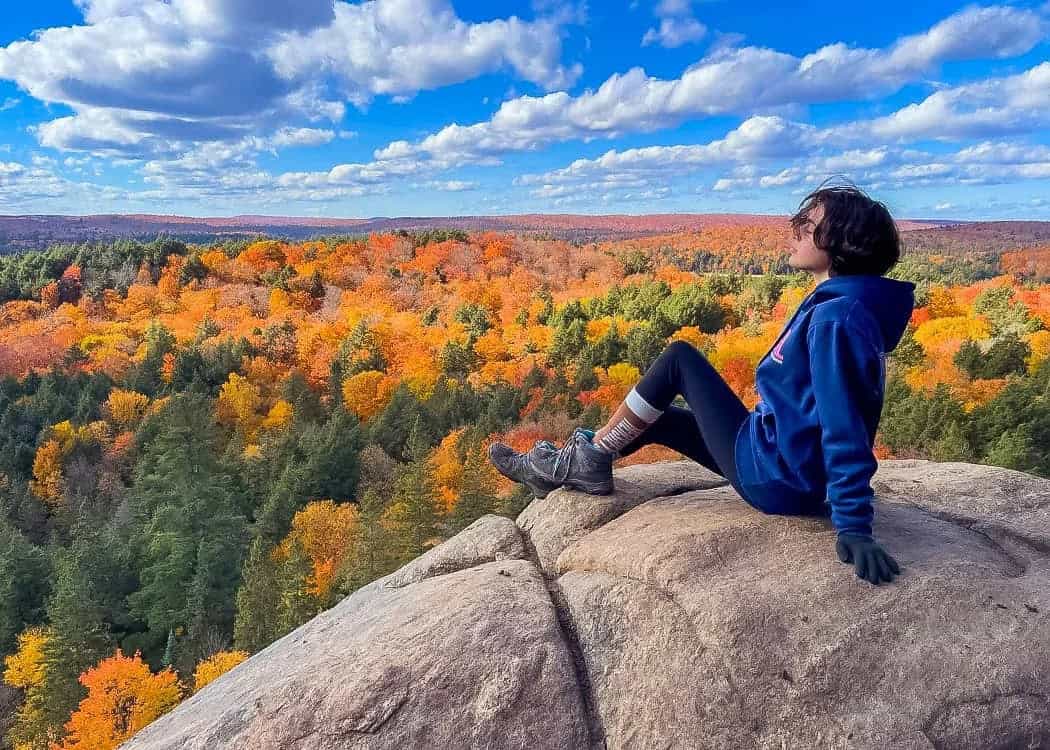
John and I also love camping in Algonquin during the fall.
There’s nothing quite like waking up to the colourful trees surrounding our campsite, especially when we’re there over Thanksgiving weekend.
Some of the best places to enjoy the fall colours include the Lookout Trail, Centennial Ridges, and Track and Tower.
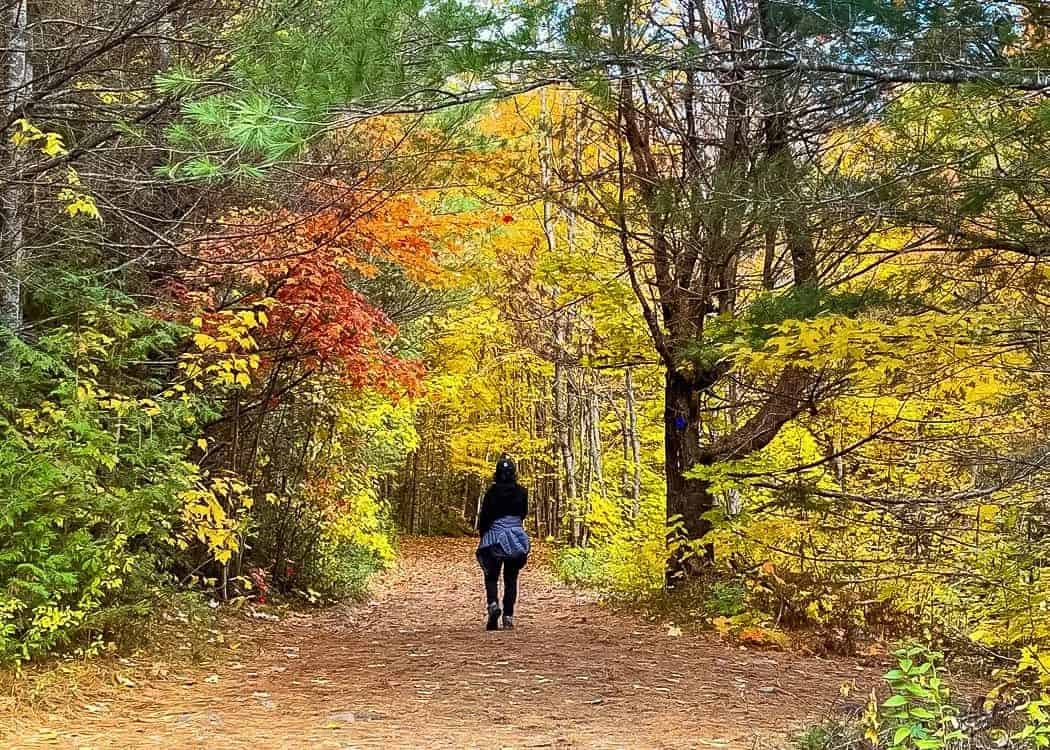
But you don’t necessarily have to hike to appreciate them. Even driving through the park or paddling along one of its lakes can be pretty spectacular.
The downside? Algonquin gets insanely busy during the fall colour season!
Tour buses full of tourists, crowded parking lots, and packed hiking trails are all part of the experience, particularly on weekends.

My tip: If you’re visiting Algonquin to see the fall colours, you’ll need a day-use permit if you plan to stop anywhere in the park. These permits often sell out on fall weekends, so be sure to reserve yours in advance.
10. Visit the Algonquin Art Centre
Here’s an Algonquin attraction that might surprise you!
Here’s an Algonquin attraction that might surprise you! While most people visit the park for its hiking trails, lakes, and wildlife, Algonquin is also home to an art gallery.
Located at kilometre 20 along Highway 60, the Algonquin Art Centre features works by Canadian artists inspired by nature and the wilderness.
Inside, you’ll find paintings, sculptures, and other artwork, with exhibits that change each year.
While it’s free to enter the Art Centre and browse the gift shop, there is an admission fee to view the main exhibit.
The Art Centre also has a fantastic gift shop! We picked up several gifts for the kids during our visit, including a gorgeous wildlife puzzle and a card game designed to teach you another language.
A bit random, I know, but that’s part of the fun of browsing!
Another thing worth mentioning is the large parking lot.
We stopped at the Art Centre while moving between campgrounds during our two-week Algonquin camping trip and had no trouble finding a spot for Nellie, our trailer.
My tip: The Algonquin Art Centre is open seasonally, generally from June through mid-October. Check its operating dates before planning your visit.
11. Go Birdwatching
Birdwatching is something John and I have only recently started taking an interest in, although we haven’t quite reached the point of investing in binoculars yet!
Our favourites have always been the Common Loons.
There’s something about hearing their haunting calls echo across the lake that makes them one of my favourite sounds of summer.
And spotting a pair swimming nearby while we’re out on our paddleboards is even better!
Algonquin is also home to plenty of other interesting birds, including Pileated Woodpecker, Black-capped Chickadees, woodpeckers, and Spruce Grouse.
The Spruce Bog Boardwalk and Opeongo Road are particularly popular spots for birdwatching.
And a word of warning if you’re camping at Mew Lake Campground. The campground seems to be home to an entire flock of Blue Jays, and they are LOUD!
Don’t be surprised if their constant squawking becomes your morning alarm clock. We certainly didn’t need one during our stay!
My tip: You don’t need fancy equipment to enjoy birdwatching in Algonquin. Just keep your eyes and ears open while hiking, paddling, or hanging out at your campsite. You might be surprised by how many different species you notice.
12. Explore the Algonquin Visitor Centre
The Algonquin Visitor Centre is one of those places I think everyone should visit at least once.
Located at kilometre 43 along Highway 60, the centre has exhibits covering the park’s wildlife, natural environment, and human history.

There’s also a theatre presentation, an observation deck overlooking the surrounding forest, and a bookstore operated by The Friends of Algonquin Park.
If you’re looking to stretch your legs, there are also two hiking trails accessible from the Visitor Centre area.
And with picnic tables outside, it’s a great place to stop for lunch while exploring the park.

Another bonus is the large parking lots, which have plenty of room for RVs and trailers.
This makes the Visitor Centre a convenient stop if you’re travelling between campgrounds or exploring Algonquin with your RV in tow.
The Visitor Centre is open year-round, although operating hours vary by season.

My tip: Plan to spend at least an hour here, especially if you want to explore the exhibits, browse the bookstore, and take in the views from the observation deck.
13. Enjoy a Sit-Down Dinner
After a full day of hiking, paddling, or exploring Algonquin Park, you might not be interested in cooking dinner back at your campsite.
The Portage Store Restaurant at Canoe Lake is a great option if you’re looking for a sit-down meal without leaving the park.
Located right on the waterfront, the restaurant offers casual dining with an outdoor patio overlooking Canoe Lake.
Unfortunately, John and I haven’t had a chance to eat here yet. The restaurant was unexpectedly closed when we stopped by during our visit.
But we’ve checked out the menu, and the food looks delicious! Plus, the views from the outdoor patio are pretty awesome.
It’s definitely on our list of places to try during our next Algonquin camping trip.
My tip: The restaurant operates seasonally, and hours can change. Check that it’s open before making a special trip, especially if you’re hoping to enjoy dinner on the patio.
14. Visit the Algonquin Logging Museum
Long before Algonquin became one of Ontario’s most popular provincial parks, logging played a major role in the region’s history.
Located at kilometre 54.5 along Highway 60, the Algonquin Logging Museum tells that story through historic equipment, reconstructed buildings, and outdoor exhibits.
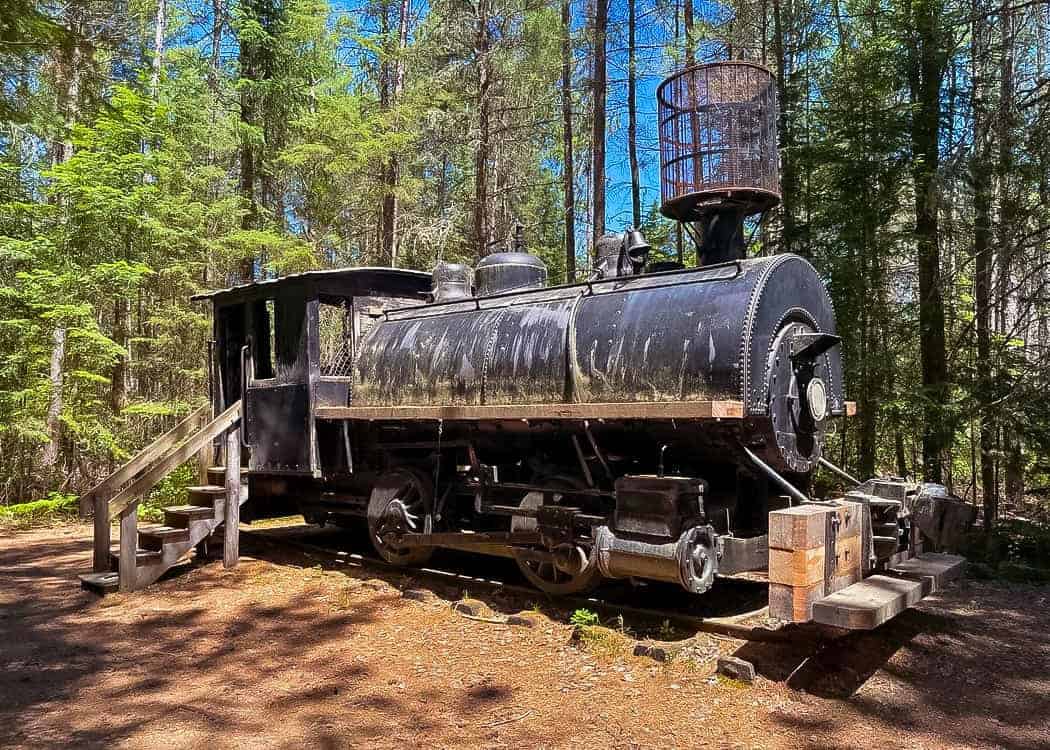
John and I walked the 1.3-kilometre interpretive trail during one of our visits, and we really enjoyed it.
It’s an easy walk with plenty to see along the way, including a recreated logging camp, old logging equipment, and a steam-powered amphibious tug known as an alligator.
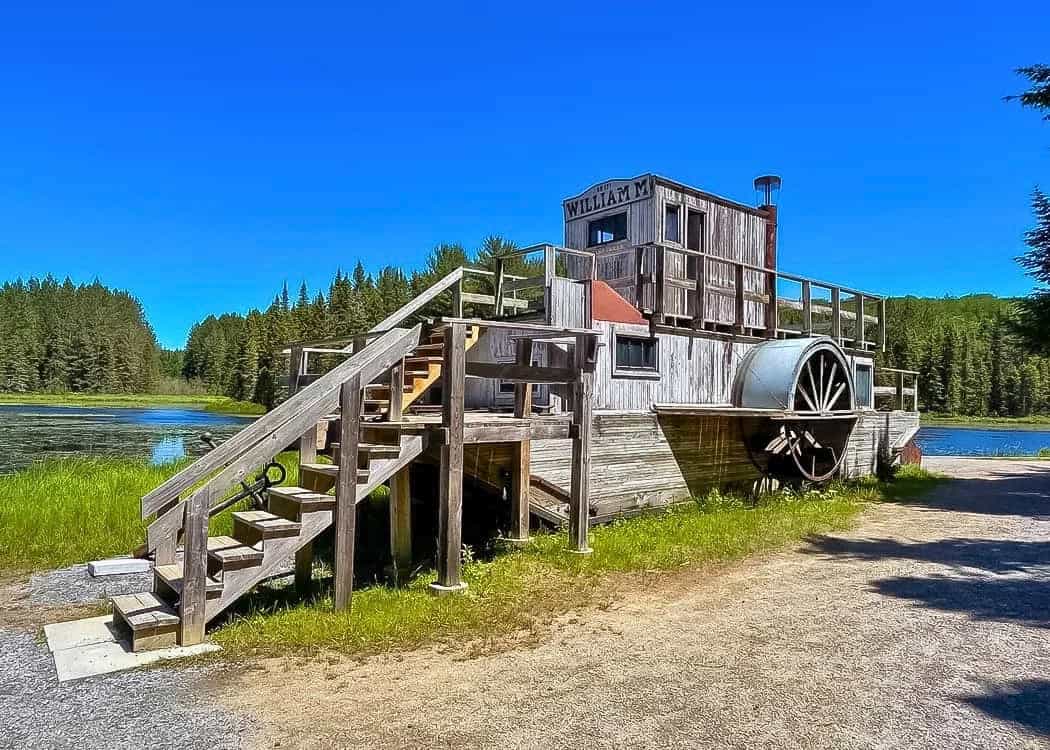
The exhibits give you a good idea of what life was like for the loggers who worked in Algonquin.
It’s a great activity for families, especially if you’re looking for something that doesn’t involve a long hike.
My tip: Allow about an hour to explore the trail and exhibits. The outdoor trail is accessible year-round, although the museum’s reception building operates seasonally.
15. Enjoy Winter Activities in Algonquin Park
Algonquin isn’t just a summer destination. There’s plenty to see and do in the park once the snow arrives.
Cross-country skiing is one of the most popular winter activities, with several trail networks to explore, including Fen Lake, Leaf Lake, and Minnesing.
The trails vary in length and difficulty, offering options for both beginners and experienced skiers.
Snowshoeing is another great way to explore Algonquin in winter. Many of the park’s hiking trails remain accessible, although you’ll want to check trail conditions before heading out.
If skating is more your thing, Mew Lake Campground typically has an outdoor skating rink when weather conditions permit.
And for those who don’t mind camping in the cold, Mew Lake Campground is open year-round, making it possible to spend a few nights in Algonquin during the winter months.
John and I haven’t experienced Algonquin in winter yet, but it’s definitely something we’d like to try.
After spending so much time exploring the park during the warmer months, I think it would be interesting to see how different it looks covered in snow.
My tip: Winter services are limited compared to the summer months. Check the Ontario Parks website for current trail conditions, available facilities, and seasonal closures before your visit.
16. Attend a Discovery Program
If you’re interested in learning more about Algonquin’s wildlife, history, and natural environment, attending a Discovery Program is a great place to start.
Throughout the warmer months, park naturalists offer a variety of educational activities, including guided hikes, presentations, and interactive programs designed for visitors of all ages.
These programs are particularly good for families with children, giving kids the opportunity to learn about the park’s plants and animals from people who know Algonquin best.
John and I haven’t attended one of these programs yet, but we’ve often noticed them advertised around the campgrounds.
It’s definitely something worth checking out, especially if you’re spending several days in the park.
My tip: Check the Discovery Program schedule at the campground or Visitor Centre when you arrive. Activities and locations vary throughout the season.
17. Shop for Algonquin Souvenirs
No camping trip to Algonquin would be complete without a little souvenir shopping!
And thankfully, there are several places throughout the park where you can pick up something to remember your visit.
The Algonquin Visitor Centre, Lake of Two Rivers Store, and Algonquin Art Centre all have gift shops worth browsing.
The Portage Store at Canoe Lake is another great stop, with a selection of Algonquin and Ontario Parks merchandise.
John and I have picked up quite a few souvenirs during our visits. Some of our favourites include patches, stickers, Christmas ornaments, and socks.
We also picked up some Ontario Parks clothing at the Canoe Lake store, which was a nice addition to our growing collection of park souvenirs!
My tip: Not all of Algonquin’s gift shops carry the same merchandise, so it’s worth checking out a few different locations. You never know what you might find!
Final Thoughts on Things to Do in Algonquin Park
After camping at several of Algonquin’s campgrounds and exploring different areas of the park, it’s safe to say that John and I never seem to run out of things to do.
And while hiking and paddleboarding will probably always be our favourite activities, we’ve really enjoyed checking out some of the park’s lesser-known attractions along the way.
We still have plenty of Algonquin left to explore, which gives us a good excuse to keep coming back!
Pin This Post for Later!
Related Posts:
- 17 Things to Do in Algonquin Park (#10 May Surprise You!)
- Algonquin: Rock Lake Campground Review & Guide
- Algonquin: Pog Lake Camping Review & Guide
- Algonquin: Canisbay Lake Campground Review & Guide
- Algonquin: Lake of Two Rivers Campground Review & Guide
- Algonquin: Kiosk Campground Review & Guide
- Algonquin: Brent Campground Review & Guide
- Algonquin: Mew Lake Review & Campground Guide
