
Teardrop Trailer Campground Etiquette That You Need to Know
Wondering what proper campsite etiquette is? Not quite sure how to behave in a campground so as not to annoy other campers?
Well, you have come to the right place! John and I are pretty seasoned campers and have come across all kinds of people, both good and bad, in our journeys.
Whether you have a Teardrop Trailer like ours or you are camping in a tent or a larger RV, there are certain unspoken rules to follow while camping.
And while I understand that some newbie campers may not know ALL the ins and outs of camping, some things are just basic common sense.
Or so you would think.
Let’s take a look at some basic campground etiquette that you need to know, whether you have a Teardrop Trailer or not.
Arrival and Setup Etiquette
The best place to start is at the beginning! Good etiquette starts from the moment you arrive at the campground.
1. Follow check-in procedures and arrival times
When you arrive at the campground, chances are check-in will take place at a gate or office. If you need to exit your vehicle, park your trailer in a designated spot or off to the side of the road.
Don’t block the roadway for campers who are maybe just returning to the campground and need to get through.

When you make your way to your campsite, just remember, it’s not a race!
Campgrounds are full of children and animals (both pets and wild), so you want to respect the speed limits on the camp roads.
Even though the main roads may be nicely paved and appear to be wide open, you don’t need to drive like Mario Andretti.
Go at a nice slow pace. Remember, if you are towing a trailer of any kind, it’s going to take you longer to stop if someone runs into the road unexpectedly.

Also, you need to respect check-in times.
If the check-in time is 2 pm (like it is for all Ontario Parks), don’t arrive at noon and expect the current occupants of your site to rush out.
A word of advice, if you arrive early, you may have to park in the overflow lots until your site is free.
Don’t sit at the site and make the current campers uncomfortable!
True story.
2. Respect Other Camper’s boundaries when setting up your teardrop trailer
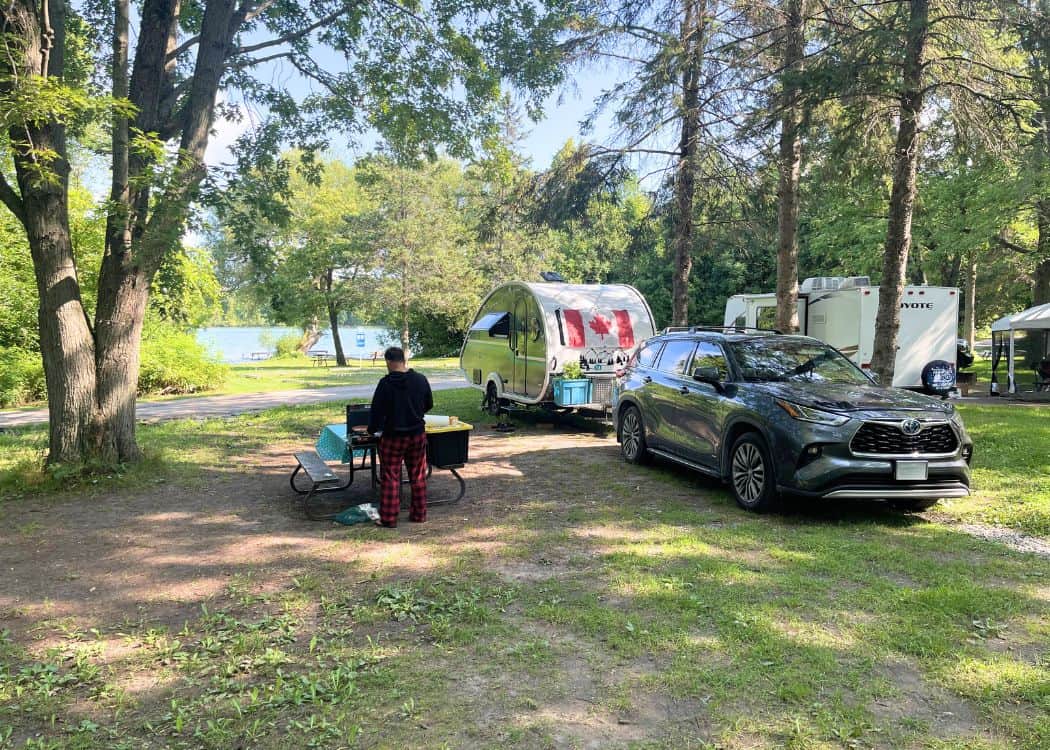
We love the fact that our Teardrop “Nellie” is small enough that we usually have plenty of options on where to park her on a campsite.
As a result, we can survey the situation, and make a concerted effort not to get too close to our neighbours.
Granted, this may not always be easy, or possible, but we try.
While we were camping in Algonquin’s Rock Lake Campground last year, we ran into some clueless campers.
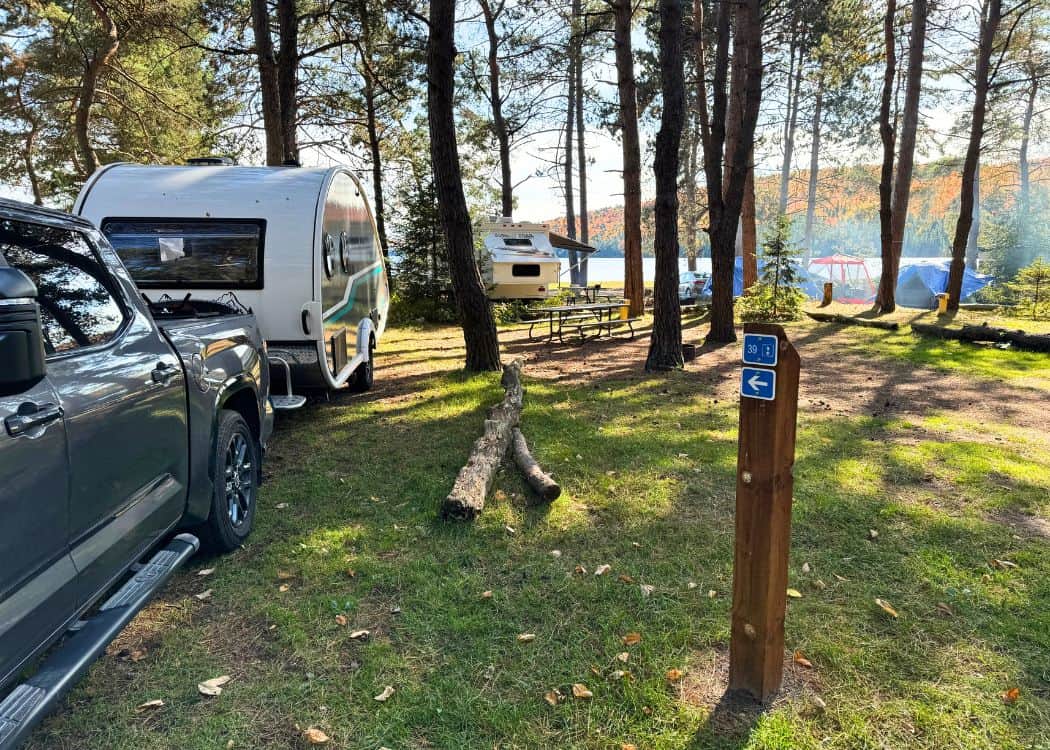
The sites were not very private, but were quite large, especially for our Teardrop, or a tent.
We had our site set up with Nellie parked to one side of the site, about four feet from the boundary.
Our neighbour showed up several hours later, with a single tent, and thought it would be a grand idea to put up both their tent and dining tent right next to Nellie!
They were actually riding the boundary line! Their dining tent was closer to Nellie than ours was!!
Meanwhile, the whole rest of their site sat empty. As did the site on the other side of them!
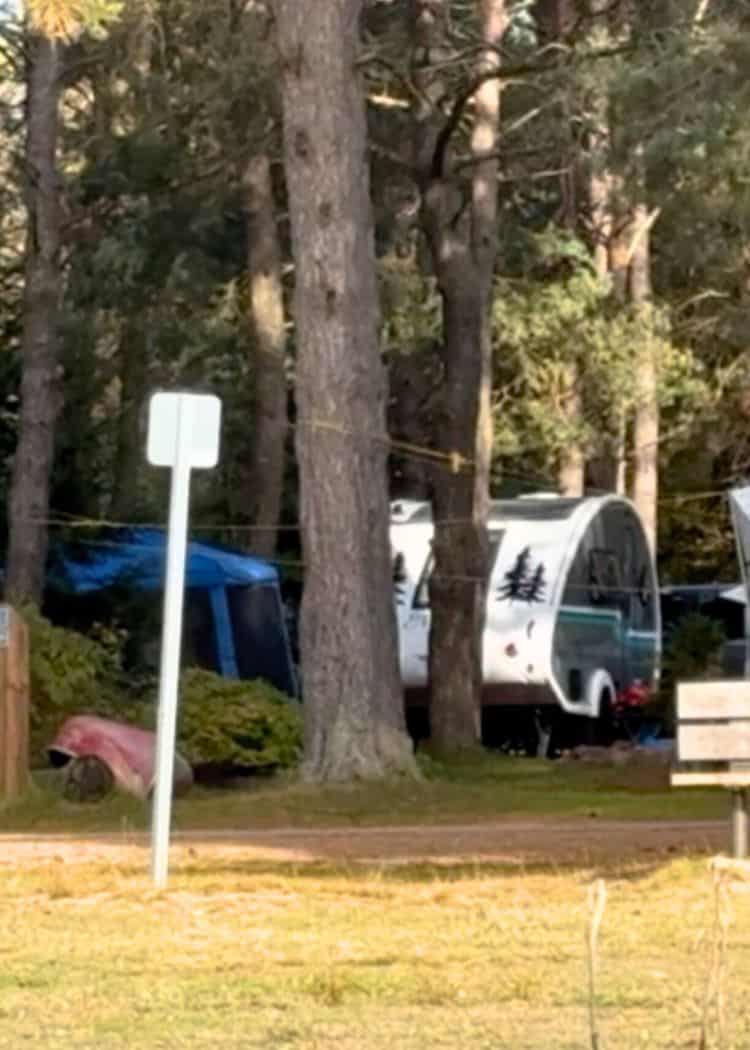
And it certainly didn’t help that the four occupants got up at the crack of dawn every morning (6 am), and chatted loudly while cooking and eating their breakfast right under our bedroom window!
Sigh. Please don’t be that kind of camper!
3. Park Your Vehicle and Trailer correctly and safely
Of course, the running joke among RVers is just how entertaining it is to watch other campers park their rigs.
You just know someone will start yelling at some point (we are not immune from this either)!
Just make sure that while you are backing in your RV, or even just parking your vehicle, you are doing it safely.
Have a spotter and make sure that there are no obstacles or people in your way.

Also, make sure that both your vehicle and trailer are completely off the road.
We have come across this situation on more than one occurrence.
Someone has parked their vehicle parallel to the roadway but is not completely on their site.
Camp roads are notoriously narrow. We have had to ask people to move their vehicles because we could not a) get out of our campsite, or b) were unable to pass with our tiny Teardrop!

This is not cool! Especially if the campers have left their site to go to the beach, etc, and you’re stuck trying to figure things out.
Respect Quiet Hours
As a camper, one of the biggest pet peeves is when people don’t respect quiet hours.
4. Understand campground quiet times
Know when quiet hours are, and respect them. I can’t say it enough!
For the most part, quiet hours typically start and end between 11 pm and 7 am. This is true for many of the Canadian National Parks.
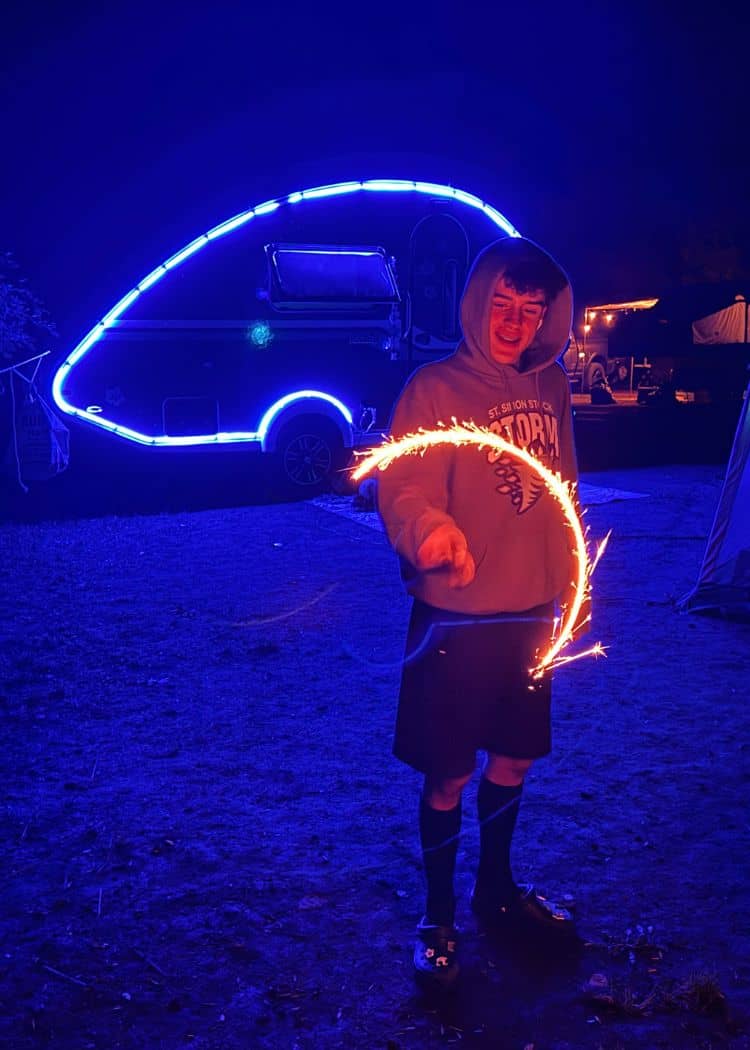
Because each campground may have slightly different times, it’s important to check and respect posted rules.
These are usually posted on bulletin boards around the park and in the park office.
On several occasions, have seen Park Rangers needing to go out to campsites to ask people to turn down music late in the evening.
5. Minimize Noise and Light – especially late at night or early morning
Don’t be that person who blares their stereo at full blast throughout the day and into the night. Especially if you are camping in a radio-free campground!
Also, do not speak so loudly that I can hear your conversation three campsites over!
Many people, us included, look forward to a peaceful camping experience. If I wanted noise, then I would stay in the city.

Don’t get me wrong, the sounds of children playing, people laughing, or normal conversational tones are fine.
What I don’t like, is drunken cursing at night by the fire, being woken by car alarms and slamming doors, or loud conversations in the wee hours of the morning (one reason we try to stay away from campsites near the loo).
6. Handle late arrivals and early departures quietly
I know that it sometimes cannot be helped, but if at all possible, try not to arrive at or depart from campsites too late at night or too early in the morning.
I know that when we are setting up our campsite, it often gets loud with putting down our stabilizer jacks, rummaging in the back of the truck for gear, and just hauling around of stuff.

These are all normal-sounding activities at 2 o’clock in the afternoon, but at 11 pm (or 6 am), they can be a little irritating.
We have been woken up by the sounds of campers inflating their air mattresses and setting up their tents at 2 am!
7. Turn off unnecessary lights to respect neighbours’ sleep
Sometimes excessive light is almost as bad as noise.
Don’t keep your fancy twinkle lights, patio lanterns, or even porch lights on your RV on all night.
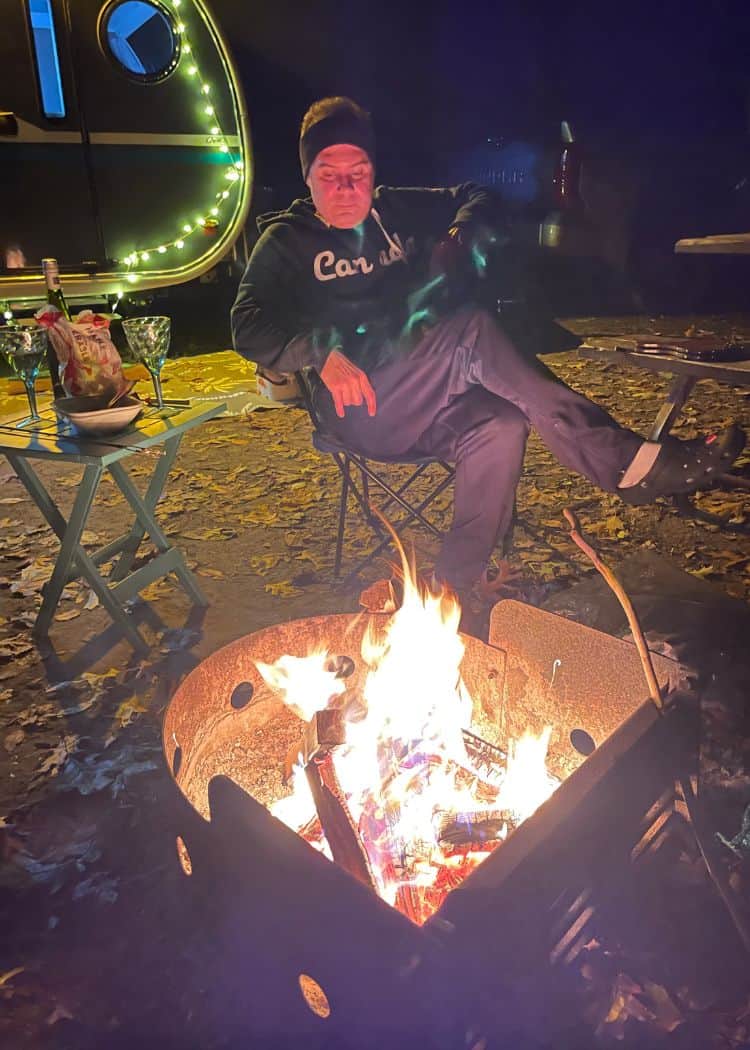
Many campsites just don’t have that kind of privacy where your lights won’t be bothering the neighbours.
Turn them off as soon as you retire for the night. And sooner if they are really bright.
8. Leave floodlights and overly bright outdoor lights at home
You would think that this was a no-brainer, but sadly, it’s not.
We camped at McRae Provincial Park one summer, and several families had booked neighbouring sites.
Well, they decided to put all their tents on one site, and picnic tables on two sites.
They then set up several spotlights in the trees to fully illuminate all their sites, not to mention everyone’s sites around them.
Sigh.
The worst part was, they were also noisy and extremely rude. The lights were on until after midnight, forcing us to close our blinds (McRae campsites are pretty open).
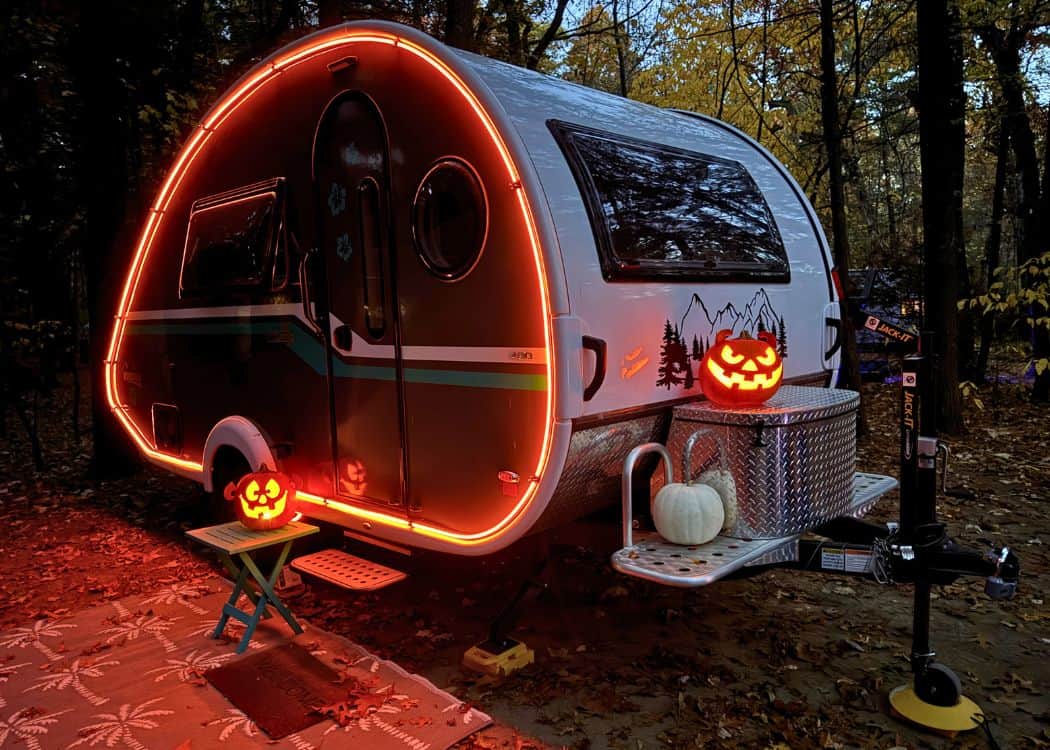
If you are going to use lights on your site, just make sure that they don’t blind the neighbours!
Oh, and remember to turn them off before heading to bed!
Campfire Courtesy
What is camping without a campfire? While there is something to be said about a cozy evening in front of the fire, you really do need to be careful.
9. Check and follow campground fire rules
As a courteous camper, make sure that you know the rules when it comes to your campfire.
Parks will usually post the rules online, or have them posted in the camp office.
The most important rule to follow? If there is a fire ban, DON’T light your campfire!
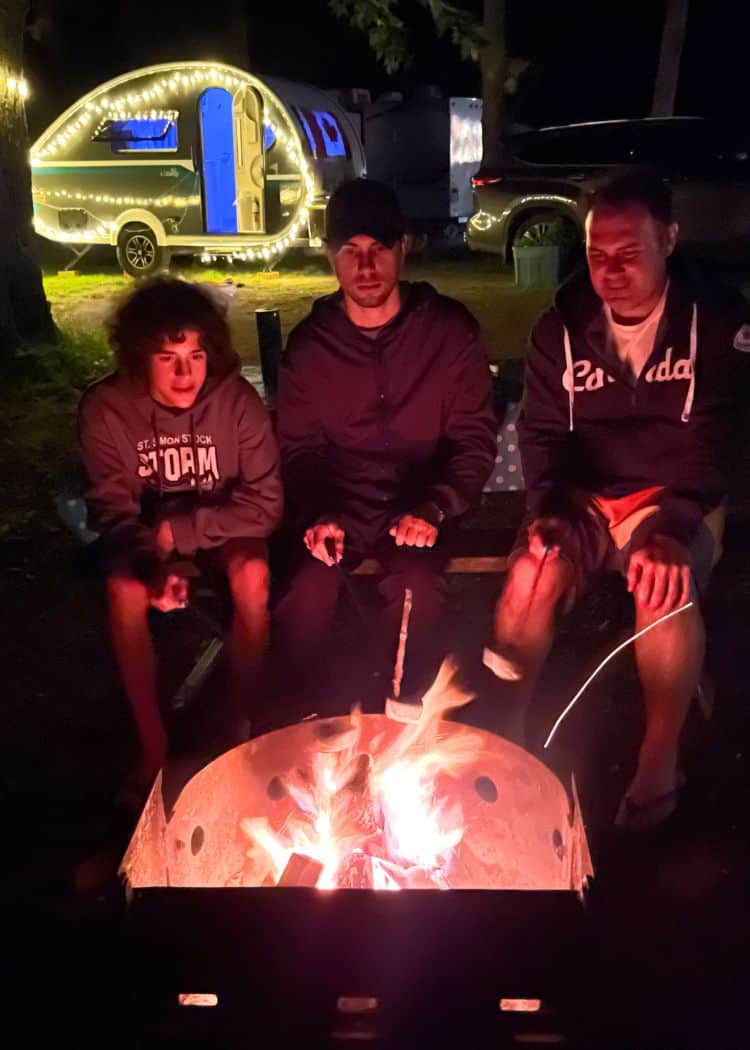
Next on the list, most campgrounds have a curfew of some kind for campfires. This helps to keep the park quiet at night.
Campgrounds also have a rule against bringing in firewood from areas outside of the park. This prevents invasive species from spreading.
Just don’t do it! We have seen tons of trees cut down in provincial parks because of invasive beetles that were killing the forest.
Another thing that isn’t ok, is to scour the forest for wood to burn. It’s not allowed. Spend a few bucks to buy it!

We once saw a family attempting to cut up the logs used to separate campsites!
And lastly, the fire pit is not a garbage can.
Don’t try to burn things that shouldn’t be burned, then leave the remains in the fire pit for the next person to deal with.
10. Keeping your fire safe and under control
Campfires do not need to be roaring bonfires!
There’s no need to dump your entire bag of firewood into your fire pit at once!
This can cause the flames to get too high, and the embers can be blown into the surrounding areas which isn’t safe.

We will never forget the family camping down the road from us in Bruce Peninsula National Park.
Their fire was so large that it lit their entire site, and we had no trouble seeing it from several campsites away. Crazy!
11. Properly extinguish fires before sleeping or leaving the site
This, unfortunately, is something that we see a lot.
People leave their fires burning and go to bed. Or, they leave their campsite to go to the beach, with a fire still going.
We don’t want to inadvertently set the forest on fire, so never leave your campfire unattended.
It’s not hard to extinguish the smouldering remains of a campfire.
Using Shared Facilities Responsibly
Camping is a fun, relatively inexpensive and family-friendly way to spend a weekend. But with the hundreds of people that are using a campground on any given day, it can get a little messy.
12. Be Respectful When Using campground bathrooms and showers
It seems like when it comes to bathrooms and showers, this is where many people just don’t get proper etiquette and behaviour.
Don’t do dishes in the bathroom sink! I shouldn’t have to wait to wash my hands because you are washing your pots and pans. Just gross.

Flush toilets and clean up after yourself.
Don’t leave wads of your hair all over the shower walls and floor. Again, clean up after yourself and leave it in good condition for the next person.
And if there is a line for the showers, don’t jump the line or invite all your family to join you in the line!
13. Be Courteous When Using shared kitchens or washing stations
Shared kitchens and washing stations aren’t something you usually come across in Ontario Parks, but we have seen them in private campgrounds and in National Parks.

Just be courteous. Don’t make a mess. If there are people waiting, don’t take your time.
And don’t leave dirty sponges, dish rags, or food particles in the sink. Just yuck!
14. Know Your Laundry Room Etiquette
Since we don’t usually do laundry at campgrounds, I haven’t really come across any bad behaviour.
With one exception.

Don’t remove someone else’s clothing from a machine, so that you can use it. Give them the opportunity to come and remove it themselves.
It’s a huge pet peeve of mine, having used many laundromats over the years.
Oh, and it doesn’t hurt to clean up after yourself either. Wipe any detergent spills and empty the lint trap.
Keeping Your Campsite Clean
Keeping your campsite clean and free from garbage is important for both your safety and enjoyment as well as for those around you.
15. Use Proper waste disposal and recycling
Leaving your garbage and recycling strewn about your site is NOT good camping etiquette.
Not only will it inevitably blow onto others’ campsites, but end up making a mess of the surrounding forest or park.
Every campground that we have ever been in always has a prominent garbage and recycling area close by.

Most parks provide separate bins for garbage, recycling, returnable bottles, small propane tanks and even for firewood mesh bags.
Use them! Don’t be too lazy to sort!
If the garbage areas aren’t close enough to walk to (some could be near the entrance of the park or near the dump station), then just pack it away until you leave the park.
It really isn’t rocket science!
16. Know How to Store Food to avoid wildlife encounters
Running into wildlife when camping should be expected. Especially considering we are invading their space.
That doesn’t mean we have to invite them into our campsites by leaving food, wrappers, and dirty dishes laying around.
Make sure that you put everything away, in your camper, or in your car, before leaving the site or retiring for the night. Raccoons especially can be quite bold and opportunistic.
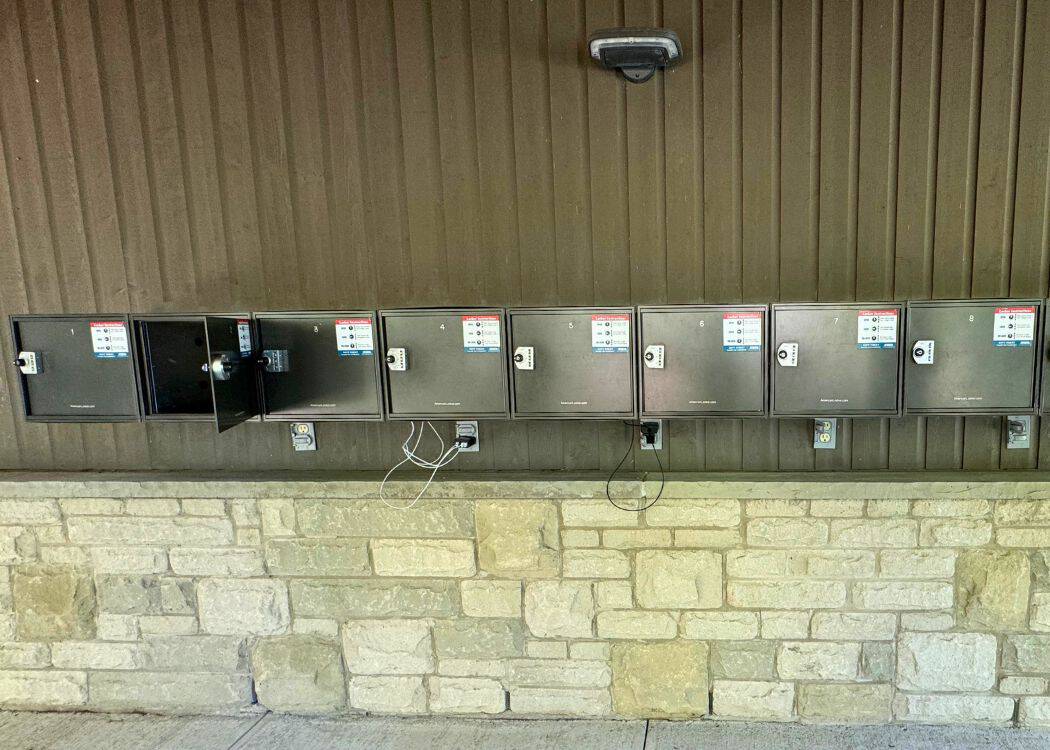
We were sitting by the fire having dessert one night. Our dinner garbage was neatly packed away in a trash bag sitting on the picnic table.
We were literally 3 feet from the table when a huge raccoon came out of nowhere, grabbed the large trash bag, and disappeared into the bushes.
We gave chase, but judging by the screaming coming from our neighbouring campsites, he must have been making the rounds.
Not to mention is was too dark to do anything.
The next morning, we found the trash bag and went on the hunt to pick up all the garbage that had been scattered everywhere.
What a mess!

But at least it wasn’t a bear! If you are camping where bears are, make sure to take extra percautions.
Use bear bins, hang your food in the trees, and don’t leave anything food-scented out.
Remember, it’s not just for your well being. If you attract bears to your site, they may wander into other peoples’ camps.
And if the bear becomes a nuisance, it may have to be put down.
17. Know How to leave your campsite tidy for the next guests
There is absolutely no excuse to leave garbage in your campsite. Always, ALWAYS clean up after yourself.
This includes using the fire pit as a garbage can! Don’t do it!
We have come to our site and found all kinds of wrappers and partially burned food waste left behind by previous campers.

If I have to clean someone else’s mess before I even get my trailer set up, I’m gonna be grumpy about it!
This goes for leaving the picnic table a mess as well. Clean up spills!
And for the love of all that is holy, DON’T let your dog sit on the table, DON’T clean your stinky slinky (poop hose) on the table, and DON’T let your toddler potty on the table.
For these reasons and many others, we ALWAYS use tablecloths!
Proper Pet Etiquette
Pets are important parts of many families, so it is only natural that you will see them in the campgrounds.
We have seen cats in enclosed
18. Following campground pet rules
This can be a sticky issue for campers who are not pet-lovers.
If you have a dog, make sure that you know the campground rules concerning pets BEFORE you book your site.
While most campgrounds are pet-friendly for the most part, there are still places where dogs are not allowed.
For instance, many parks have dog-free campgrounds.
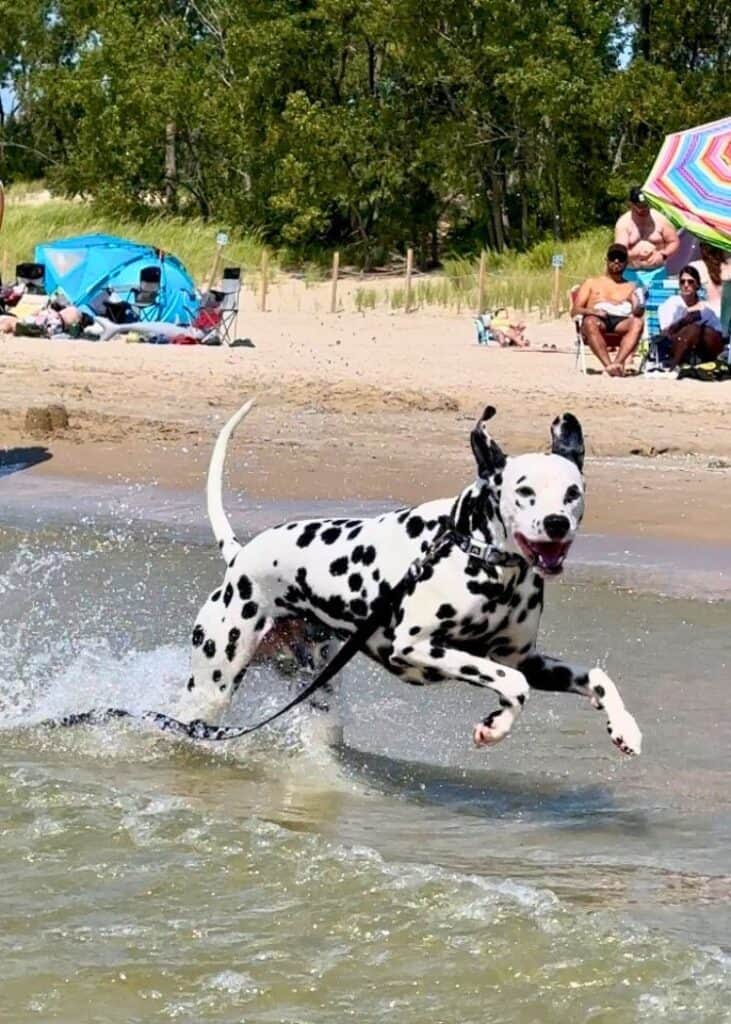
Most beaches only allow dogs in certain areas. And I have even noticed signs at the campground showers stating no pets allowed.
On the flip side, dogs are usually allowed on the hiking trails, PROVIDED that they are on a short leash.
Dogs are also welcome on the dog beaches, in most campgrounds, and in the pet exercise areas.
19. Keep pets quiet and Under control
Of course, if you are bringing a dog camping with you, it is your responsibility to ensure that your pet does not disturb other campers.
I love animals. But that does not mean I want to be woken up in the middle of the night because a dog is barking continuously at campground wildlife.
Nor do I want a dog chasing me while I’m riding my bike in the trails.
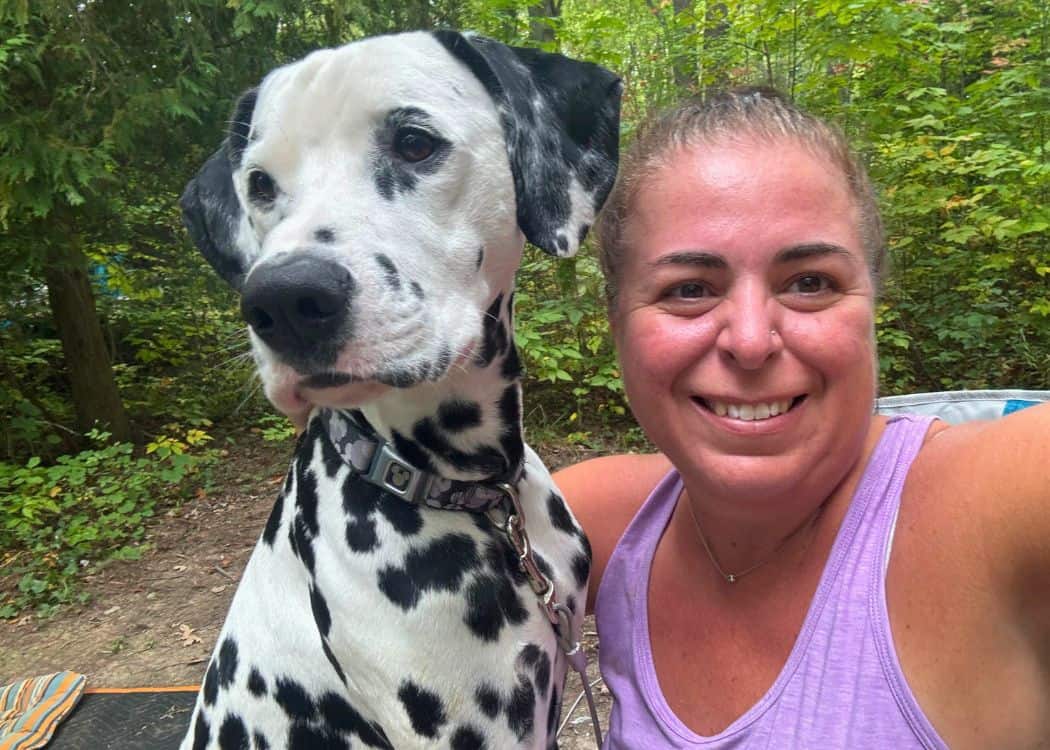
Not to mention, there are plenty of kids in campgrounds that will approach any dog that they see.
We know this from experience as Guinness is a kid magnet! Good thing he doesn’t mind people coming up to him.
But if your dog is not comfortable with strangers, this might present a problem.
Keeping your dog quiet, on a leash, and under control will keep everyone around you happy.
20. Promptly Clean up after Your pets
This should really be a no-brainer… but yet, here we are.
There is nothing worse than having to dodge poop ‘land mines’ when out walking on the trails, through the campground areas, or even on the beach!

Be courteous and clean up after your pet. That means RIGHT AWAY!
Don’t leave poop in the campsites either! Whether it’s on the ground or in a poop bag, I still don’t want to find it on my campsite!
Friendly Interaction with Neighbors
Unless you are backcountry (dispersed) camping, you are always going to have neighbours. And depending on the campground, some will be closer than others!
So getting along is paramount to having a great camping experience.
21. Greet your campground neighbours politely
We have met some really nice people while camping. Even going as far as having coffee with some!
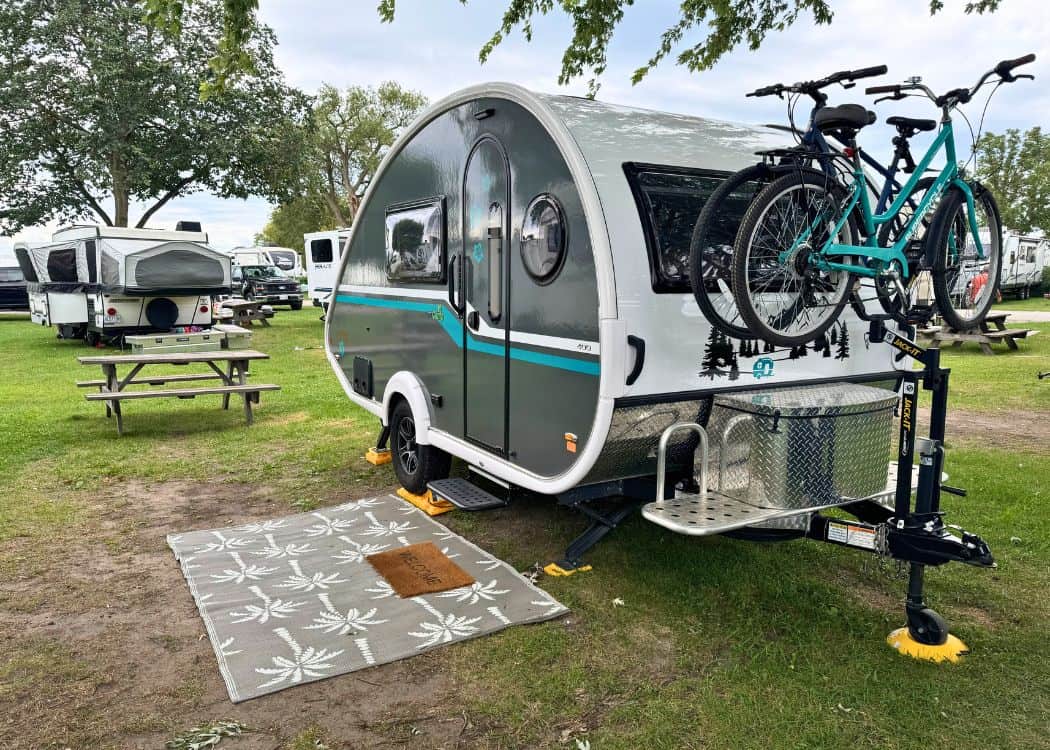
Whether it was our “neighbours” or people walking past and asking questions about “Nellie” (she garners lots of attention wherever we go), it’s always nice to be social.
That said, let your neighbours settle in before going over to speak with them. I know that I don’t like to be distracted while trying to get organized just to socialize.
Of course, I wouldn’t turn anyone away who was asking for help either.
And speaking of help, if you see your neighbour needs a hand with something, offer it!

While we were trying to back into a tight campsite, we got into a bit of a jam. We ended up unhitching our trailer, and spinning her into position manually (one of the perks of having a small Teardrop).
Our neighbour saw us struggling and immediately jumped in to help us push Nellie into position.
The following morning, our neighbour across the way got into trouble trying to get his large rig out of his tight campsite.
John and several other neighbours all got together to help spot him to make sure he got out unscathed.
Camping is like a large community. Have that mindset, and you will be okay.
22. Respect Other Campers’ personal space and privacy
In other words, NEVER walk through someone else’s campsite for ANY reason!!
This is my biggest pet peeve! And most seasoned campers will agree.
We have, unfortunately, experienced this many, many times.
People have cut across our site to get to the beach (we had a waterfront site), just to get to their site quicker, and for many more random reasons.
Some apologize when we call them out, while others act entitled and push back. Crazy, right?

Remember the family with the spotlights at McRea that I mentioned earlier?
Not only did they cut through our campsite several times to get to the boat launch, but they also had the nerve to walk between our camper and picnic table WHILE WE WERE EATING!!
When I told them for the third time to stop, the adult woman said to me (and I quote) “Why do you need all this space?”
We resorted to stringing twinkle lights across our site to prevent that family from crossing through. It worked… but still…
Unbelievable! 😡😡🤬🤬😡😡🤬🤬😡😡🤬🤬😡😡🤬🤬
23. Handle any issues or disagreements respectfully
In all the years that we have been camping, the only issues we have ever had were from people walking through our site.
And while we were able to be polite when approaching people, I am not surprised that arguments break out in campgrounds.
During our stay at Presqu’ile Provincial Park, we had neighbours who had 4 young children.
The kids were allowed to scream and yell from 6 am until well after midnight.
At one point, the kids were using their mini-van as a jungle gym, climbing and jumping from the roof to the hood.
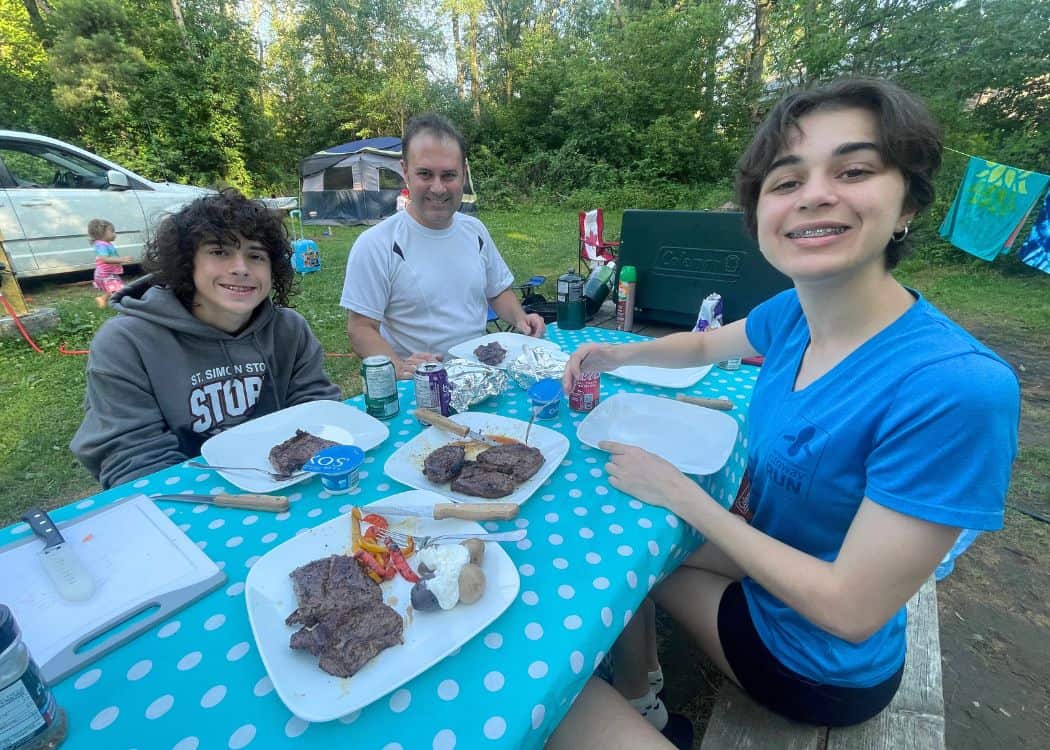
And since there was absolutely no barrier between our sites (see above pic), we had a front-row seat the entire weekend!
At least they stayed on their campsite! Not once did the kids even step a toe onto our site!
Unlike in the case of the rude family from McRae that we mentioned. Thankfully we were only in that park overnight (we were just passing through).
If I had to put up with the shenanigans all weekend (or longer), I probably would have snapped at some point.
But honestly, try to let cooler heads prevail. You are out to have fun, at the end of the day.
Departure Etiquette
Up until you leave the park, you should have good camping etiquette. This includes the whole packing up and leaving process.
24. Pack up without disturbing others
If you are in a hurry to leave and are packing up early in the morning, be considerate of others.
Whether it’s deflating an air mattress or raising your stabilizers, some noise is inevitable. Just do your best.

And just because you are leaving, does not mean that your neighbours are on the same schedule.
Try to be considerate when hooking up your rig (if you need to block the roadway while doing it), taking down your tent or dining tent, and not making noise while loading up your gear.
Or, if you are leaving around the same time as your neighbours, try not to block their driveway and inconvenience them.
25. Check out on time
This is pretty self-explanatory. Be sure to vacate your site promptly at or before the posted check-out time.
It’s not fair to the new campers who have rented the site, to have to wait for you to leave after checkout. They have paid for that spot, after all!

If you are planning to stay in the park longer, move your vehicle or rig to one of the overflow spots.
And don’t forget to take your garbage with you and leave the site tidy!
26. Be Prepared When Using the Dump Station and clean up for the next user
After you leave your campsite, if you are in a Teardrop (or other RV) chances are you are heading to the dump station.
If you are leaving right at check-out time, there will likely be a line at the dump station.
In order to help things move along smoothly, try to be prepared and ready to go once it’s your turn.

Have your gloves, hoses, wipes and anything else ready. And don’t dilly-dally!!
This is not the time to have a conversation with the people around you, make a phone call, or have a discussion with your spouse. 🙄🙄
Lastly, be sure to clean up for the next user. Use a disinfecting wipe on the hose (if necessary), hang up said hose, and put your used disposable gloves in the garbage.
27. Leave No trace behind
Last, but certainly not least, please follow the “Leave No Trace” principle.
Always leave your campsite in better condition than you found it.
That goes the same for other facilities or amenities that you may use while in the park.
Avoid damaging trees or plants, even unintentionally.

Stay on marked paths and campsites. Don’t cut new paths or set up in areas not designated for camping.
Pack out everything you pack in. In other words, take home all garbage, leftover food, and packaging.
Never leave trash behind—even small items like bottle caps or wrappers.
Final Thoughts
Good campground etiquette makes everyone’s camping experience better—including yours.
By respecting your neighbours, following campground rules, and practicing Leave No Trace, you help create a safe and friendly environment.
Not only that, but it just makes camping so much more fun for everyone.
Just remember, thoughtful camping is always appreciated!
Pin This Post for Later

Related Posts:
- Common RV Terminology and Slang for Newbie Teardrop Owners
- 150+ Fun and Unique Camper Names for Your Teardrop Trailer or RV
- 10 Top Reasons Why Teardrop Trailer Camping is Better Than a Tent
- What is a Teardrop Trailer and Are They Right for You?
- Does a Teardrop Trailer with a Bathroom Really Exist?
- What is Boondocking? A Complete Guide for Beginners
- What License is Needed to Drive an RV in Ontario
- Teardrop Trailer Campground Etiquette That You Need to Know
- Top 10 Things You Really Should Know BEFORE Buying A Teardrop Trailer
- Camping During a Fire Ban: What You Need to Know
- Complete Guide to Halloween Events at Ontario Parks
- The nuCamp Haven 220 – Is This Our Next Trailer?
- Is Winter Camping in a Teardrop Trailer Possible?
- The Best 5 Dog Beaches in Ontario Provincial Parks
- 10 Practical Ways to Use Your Teardrop Trailer
- What We Actually Eat on Camping Trips (No Complicated Recipes)
- The Camping Pantry Staples We Never Leave Home Without
- What the New Ontario Parks Alcohol Rules Mean for Campers
