What is Boondocking? A Complete Guide for Beginners
Are you a new RV owner and have heard the term “Boondocking” used in camping forums or groups? Wondering what exactly it means, or how you can Boondock?
After purchasing our Teardrop Trailer, John and I certainly had plenty of questions!
We have put together a complete guide for beginners on everything you have ever wanted to know about Boondocking and more!
From where to Boondock, what you need, and any tips or hacks, we have got you covered.
Ready to learn more? Let’s jump right in!
What is Boondocking?
Boondocking refers to the practice of setting up your RV in a location without access to standard amenities like water, electricity, and sewer connections.
Many people often mistake dry camping for boondocking. While similar, dry camping usually occurs at an established campground.
Boondocking, on the other hand, typically occurs in remote areas and involves camping outside of traditional campgrounds. This is why it is also called dispersed camping.
💡 Fun Fact: The term “boondocking” is believed to have originated from the Tagalog (Filipino) word bundók, meaning “mountain”.

What is NOT Considered Boondocking?
While the following forms of camping technically do not include hookups, if you aren’t somewhere remote, we don’t really think that you can call it boondocking:
Why is Boondocking so Popular?
Boondocking has become quite popular for several reasons.
✔️ First, it offers a sense of freedom and independence that’s hard to find in traditional crowded campgrounds.
You will be able to enjoy a more private and immersive nature experience if you are not surrounded by tons of people and other RVs.

✔️ Secondly, boondocking is budget-friendly. And who doesn’t love to save money?
Without fees for campsite reservations (which are almost as high as hotel stays at some campgrounds), it’s an attractive option for travellers looking to explore on a budget.
Besides, I am sure that many RVers would prefer to spend their money on other experiences during their travels, rather than on high reservation fees.
✔️ Lastly, you can’t beat the variety of landscapes and locations accessible when boondocking. From deserts to mountains, beaches, or forests, boondockers can choose their backdrop.
Plain and simple, many RVers opt for boondocking as a way to experience destinations away from the typical tourist paths.
Is it Legal to Boondock in Canada?
Yes. Boondocking is legal in Canada, but only in certain areas.
Crown Land
Crown Land, which is owned and managed by the government, is available for public use.
If you’re a Canadian resident, you can camp on most Crown Land for free. Visitors from outside Canada will need to obtain a permit, but it’s usually quite affordable.
However, keep in mind that not all Crown Land is open for camping. For example, there are some areas with restrictions put in place to protect the environment.
For this reason, it’s always a good idea to check the local rules before setting up camp.
National & Provincial Parks
Boondocking is not allowed in National or Provincial Parks.
However, you may find some small areas just outside the national parks, that are available for Boondocking.

Private Property
Respecting private property is important. Make sure that you have permission if you’re considering camping on privately owned land.
Urban camping, like overnight parking in a Walmart, is sometimes allowed, but not really considered Boondocking in the true sense of the word.
You would still need to look for any posted signs or ask the property owner to avoid any issues.
Where Can You Boondock?
Depending on where you live, you may have several different options for boondocking:

Is Boondocking Free?
Boondocking sites are generally free, and that’s one of its biggest appeals.
When you’re boondocking, you’re camping on public lands or in remote areas without paying for amenities like water, electricity, or sewer hookups.
While some areas, like recreation sites, might require you to purchase a permit, typically, these fees are minimal compared to what you would pay at a campground.
So, yes, one of the joys of boondocking is that it lets you explore and camp in beautiful spots without dipping into your wallet!
What is the Cost of Boondocking?
While it may be free to park on public lands, there are still some costs associated with boondocking that you will still need to work into your budget.
Some of these costs are what you would incur even with regular camping, while others are pretty specific to boondocking:
Is It Safe to Go Boondocking?
Absolutely, boondocking can be safe with the right preparations!
It’s all about choosing safe locations, being aware of your surroundings, and having a plan for emergencies.
Many boondockers enjoy peaceful experiences without any safety issues. You just need to make sure that your RV is secure, you have essential emergency supplies, and someone knows your location and plans.
Like any form of camping, a bit of common sense and preparation go a long way in ensuring you have a safe and enjoyable adventure while boondocking!

Best Safety Tips for Boondocking
Here are some of our best tips for staying safe while boondocking with your RV:
Can You Boondock in a Teardrop Trailer?
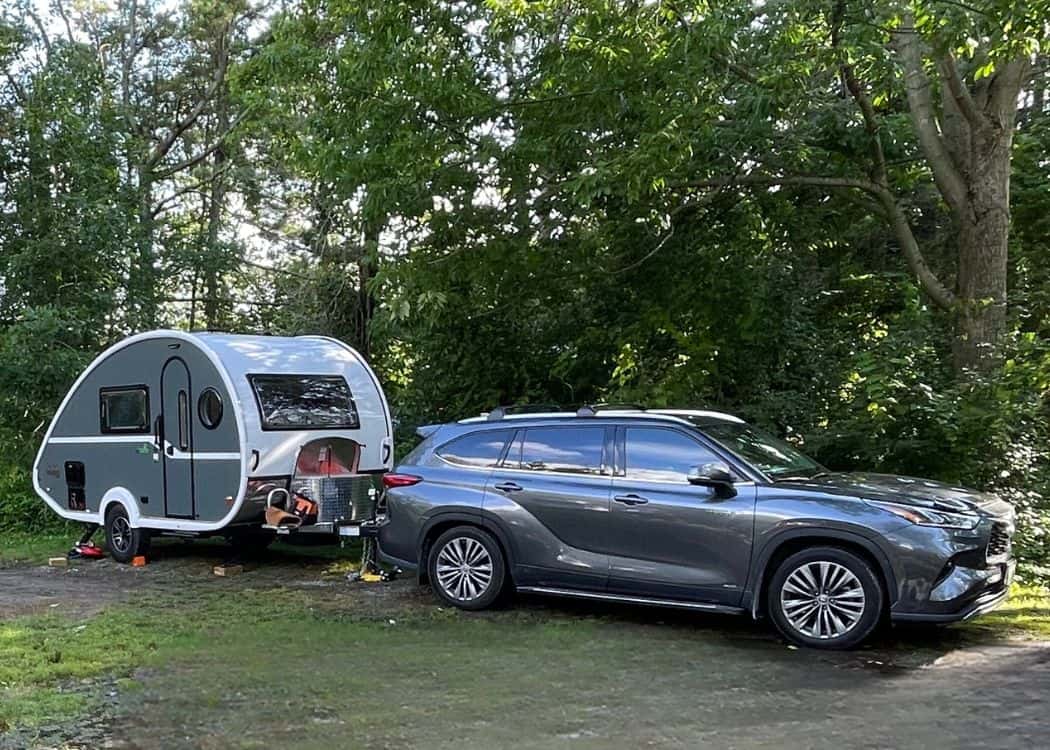
YES, you can absolutely boondock in a teardrop trailer.
Teardrop trailers are known for their compact size and efficiency, making them a great choice for getting off the beaten path.
Since they’re smaller and lighter than larger RVs, you can tow Teardrops to more remote or rugged locations that might be challenging for bigger rigs.
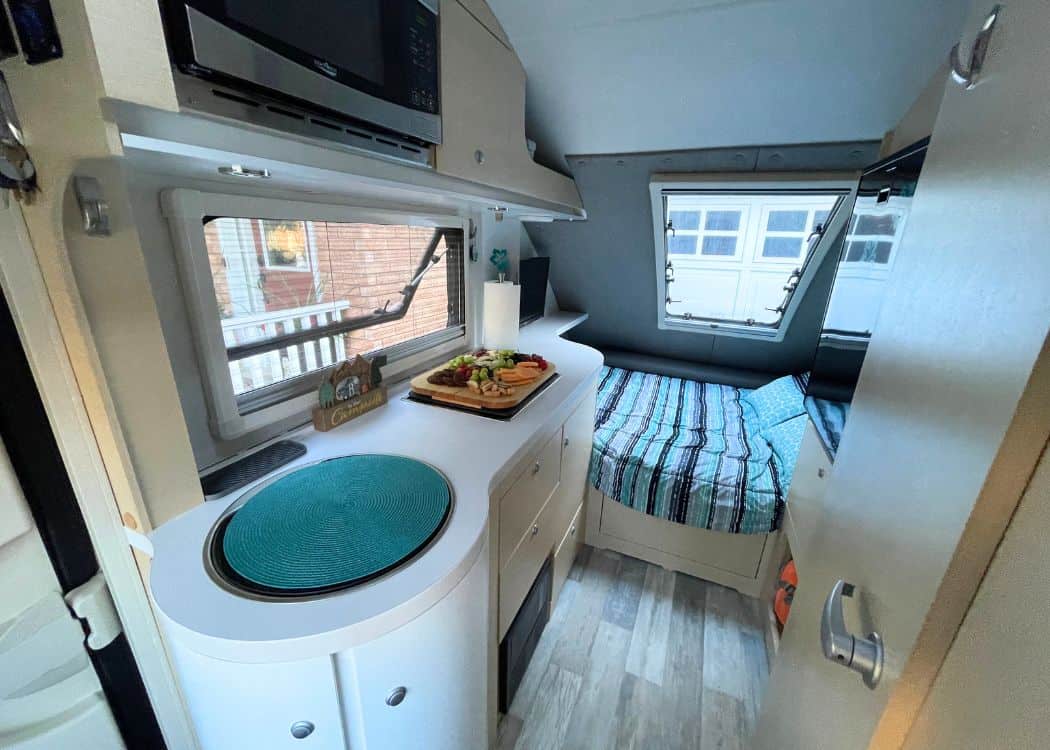
While teardrop trailers offer less space and fewer amenities than larger RVs, we find that their simplicity is definitely part of their charm and appeal.
This is especially true for Teardrop owners who also love to boondock.
Of course, with a smaller rig comes smaller water tanks, smaller waste storage, and limited power capability.
Many teardrop trailer owners use solar panels, portable toilets, and water jugs to enhance their self-sufficiency while boondocking.
In our opinion, if you want to be successful boondocking in a teardrop trailer, you really need to embrace the minimalist approach and be strategic about your packing and resource usage.
What is the Best Vehicle for Boondocking?
The best vehicle for boondocking really depends on your personal needs and style.
If you’re someone who loves comfort and space, a well-equipped RV with good water and waste storage might be a good fit for you.
But if you prefer getting off the beaten path, a rugged 4×4 with a rooftop tent or a smaller camper van might be just the ticket.
Campervans, or in our case a small Teardrop Trailer, strike a great balance between comfort and mobility.
We love that our smaller vehicle still offers all the important amenities while being easy to maneuver in remote spots.

The one thing you should consider, is the clearance of your RV, especially if you will be off-roading. The last thing you want to do is damage your rig.
Our Teardrop is the Boondock version, so we have more clearance than the regular nuCamp models. This has come in handy on rough campground roads!
Of course, if you have time, you could always scout your location ahead of time!
How Long Can You Boondock in an RV?
How long you are able to boondock in an RV is really dependent on how well you manage your resources.
In general, if you’re careful with your water usage, power consumption, and waste management, you can boondock for several days to a couple of weeks.
Of course, as we mentioned earlier, many public lands have a 14-day limit, after which you’ll need to move on.
Can You Boondock for Just One Day?
Yes, you can absolutely boondock for just one day.
This can be a great option if you’re on a road trip and need a place to rest for the night.
It’s also a great choice if you want to experience off-grid camping without committing to an extended stay.
Short-term boondocking is similar to overnight parking, but ideally, you’d be in a more natural and scenic setting.

For a one-day boondocking experience, you still need to plan ahead, but the preparation is less intensive compared to a longer stay.
You will still need to make sure that your RV’s basic needs—like water, power, and waste—are managed for the duration of your stay.
In fact, if you are a newbie, a one-day boondocking experience can give you a taste of what it is like, what you need to do, and whether or not this form of camping is even right for you.
Can You Boondock in a Group?
Boondocking in a group is definitely possible and can be a lot of fun.
When planning for group boondocking, you will need to choose a location that can accommodate multiple vehicles.
Of course, making sure that you are minimizing your impact on the environment is even more important if you are camping in a large group.
Proper planning and communication among group members will ensure that the shared adventure is successful and enjoyable for everyone involved.
What Essentials Do You Need to Boondock?
While boondocking is not a luxurious way to camp, there are still some items that you need to have with you for a successful experience.
These essentials will help you to live comfortably and sustainably off the grid:
10 Best Tips for Boondocking
Boondocking offers a unique way to experience the great outdoors, but it does require a little preparation.
Here are some of our top tips for a successful boondocking experience:

- Plan Ahead: Research your destination, know the rules of the area, and make sure you have directions and understand the accessibility of the location.
- Arrive Early: Arrive during daylight hours so that you can see what the site looks like, find the most level spot for your rig, and determine if there are any dangers in the area.
- Have a Full Fresh Water Tank: Make sure your fresh water tank is full before you arrive. Then, be sure to use water sparingly. Bring extra jugs of water for drinking.
- Manage Waste Efficiently: Keep your environment clean by managing waste properly. Have a plan for disposing of both trash and wastewater.
- Use Solar Power: Use solar panels if you have them. They provide a sustainable energy source, reducing the need for generators and saving on fuel. Just make sure that you have an inverter.
- Conserve Energy: Use small appliances (ie coffee makers) that don’t use a lot of electricity, and be conservative with your power use to save on propane or gas costs.
- Be Prepared: Bring all necessary supplies, including extra food, water, and emergency gear in case you need to stay longer than planned. Always have a first-aid kit and tools for minor repairs.
- Charge Your Phone and Other Devices Ahead of Time: It’s important to have a way to communicate in case of an emergency, so make sure that your phone is fully charged.
- Respect Wildlife: Keep a safe distance from animals and avoid feeding them. Store your food securely to not attract wildlife to your campsite.
- Leave No Trace: Preserve the natural beauty of your boondocking site. Take all trash with you, and don’t leave any marks of your stay behind.
What Are the Leave No Trace Principles?
This should absolutely go without saying. But whenever you are camping, whether it’s boondocking or at an organized campsite, you should ALWAYS follow the Leave No Trace principle:
Final Thoughts
A boondocking trip not only offers a free camping experience but also provides you with a unique and rewarding way to connect with nature.
It allows the freedom to explore off-the-beaten-path locations without the constraints of traditional campgrounds.
Whether you’re in an RV, van, or any off-grid setup, boondocking allows you to embrace the simplicity and beauty of the great outdoors.
With thoughtful preparation, respect for the environment, and a spirit of adventure, you can experience the unparalleled sense of freedom that comes with setting up camp in the wild.
Pin This Post For Later!

Related Posts:
- Common RV Terminology and Slang for Newbie Teardrop Owners
- 150+ Fun and Unique Camper Names for Your Teardrop Trailer or RV
- 10 Top Reasons Why Teardrop Trailer Camping is Better Than a Tent
- What is a Teardrop Trailer and Are They Right for You?
- Does a Teardrop Trailer with a Bathroom Really Exist?
- What is Boondocking? A Complete Guide for Beginners
- What License is Needed to Drive an RV in Ontario
- Teardrop Trailer Campground Etiquette That You Need to Know
- Top 10 Things You Really Should Know BEFORE Buying A Teardrop Trailer
- Camping During a Fire Ban: What You Need to Know
- Complete Guide to Halloween Events at Ontario Parks
- The nuCamp Haven 220 – Is This Our Next Trailer?
- Is Winter Camping in a Teardrop Trailer Possible?
- The Best 5 Dog Beaches in Ontario Provincial Parks
- 10 Practical Ways to Use Your Teardrop Trailer
- What We Actually Eat on Camping Trips (No Complicated Recipes)
- The Camping Pantry Staples We Never Leave Home Without
- What the New Ontario Parks Alcohol Rules Mean for Campers
