
Top 15 Tips for Towing a Teardrop Trailer with Your Family Car
Are you worried about towing your Teardrop Trailer with your family car?
I know that as first-time trailer owners, we certainly were!
In fact, we spent more time worrying and researching about towing, than we did on making the decision to buy a Teardrop in the first place.
From towing capacity and hitch weight to tips on how to safely drive on the highway, this article offers advice and things you may need to consider before heading out on your first adventure.
Let’s dive right in!
Tips for Towing a Teardrop Trailer
Not in any particular order, the following are the important things we considered before towing our Teardrop Trailer “Nellie” for the first time.
1. Check the Towing Capacity on Your Family Car
I can’t even tell you how many hours were spent researching, worrying, and talking to a variety of other trailer owners about towing capacity.
We wanted to make absolutely certain that our family vehicle could handle the weight of our new trailer.
After all, not every car is cut out to haul your home away from home, no matter how compact it might seem.
The first place to look for answers is in your car’s manual. If that manual has vanished into the black hole where all missing socks and keys go, a quick online search with your car’s make, model, and year should do the trick.
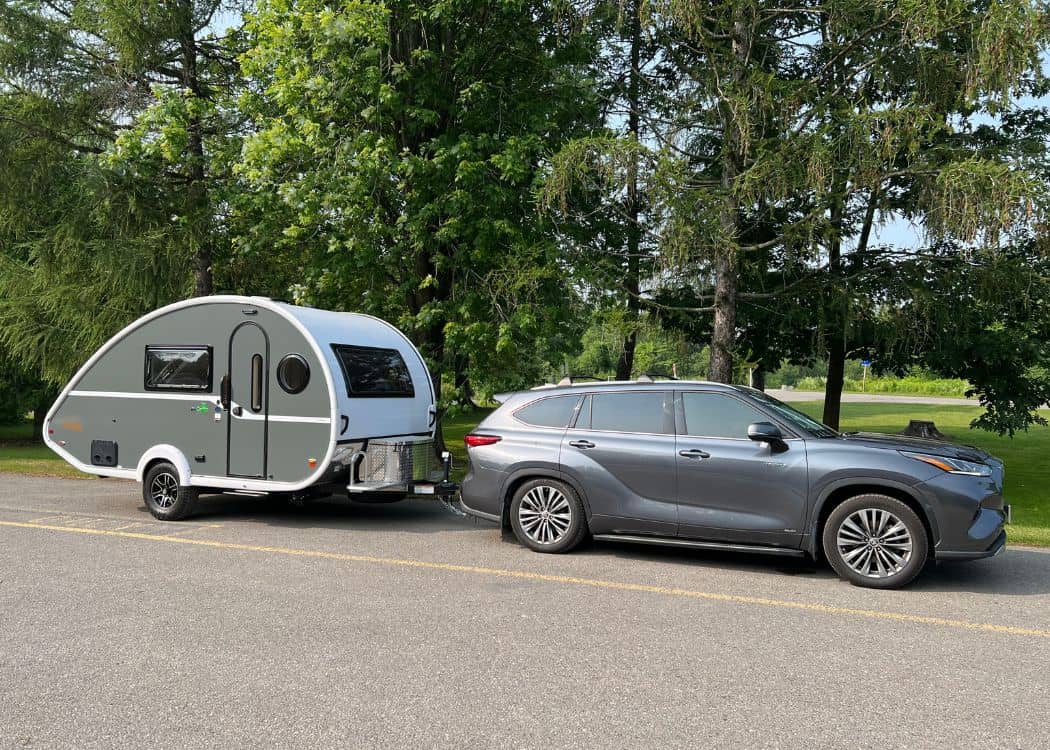
Your trailer’s weight (when fully loaded with all your gear, snacks, and those extra pairs of shoes “just in case”) should never exceed your car’s towing capacity.
In fact, when we spoke to the technicians at our car dealership, we were told that staying under 75% of that capacity is the safety sweet spot.
Don’t make any assumptions. This isn’t just about avoiding a chat with a roadside assistance operator.
Being well-informed will help to keep you, your family, and your Teardrop Trailer safe and sound, from driveway to campground and back.
2. Be Sure to Get the Right Trailer Hitch
Not all hitches are created equal. In fact, the right one can make or break your teardrop trailer adventure.
Think of the hitch as the handshake between your car and trailer; it needs to be firm, secure, and just right.
First things first, identify the class of hitch your vehicle requires. This is typically based on your vehicle’s towing capacity and the weight of your trailer.
For most teardrop trailers, a Class I or II hitch will do the job. But always double-check based on your specific setup.
Next, installation is key. If you’re not a DIY guru, no worries—many places can install it for you, ensuring it’s done correctly and safely.
I had the Toyota dealership install the hitch on my Highlander for me.
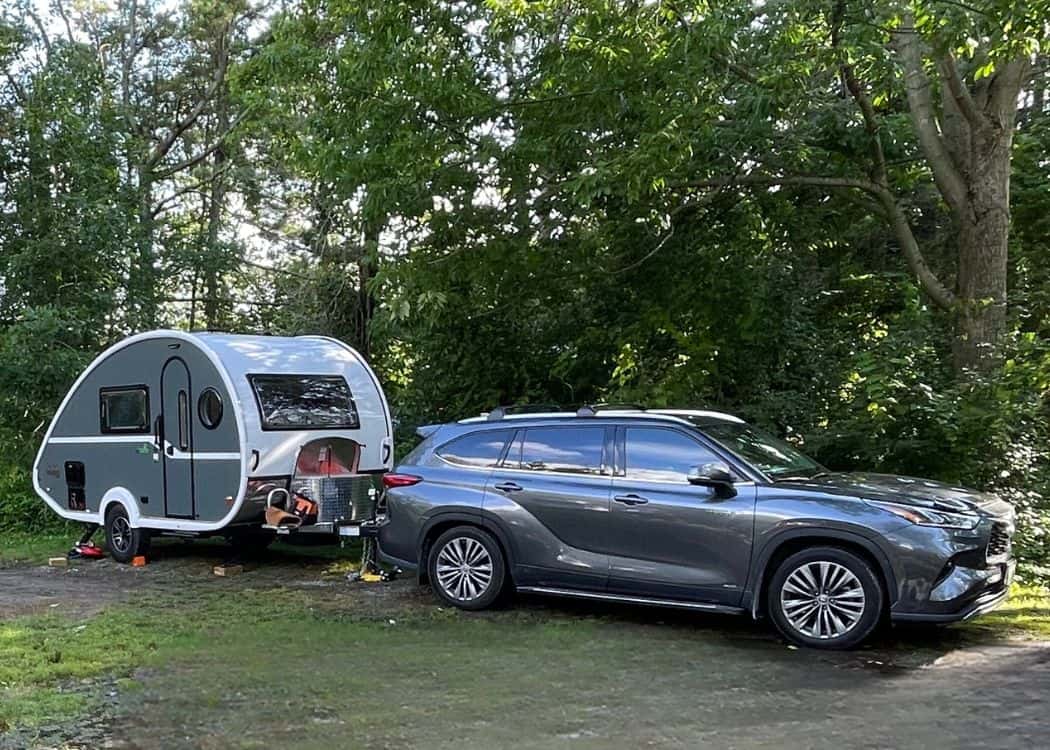
After all, this isn’t the place to cut corners. A properly installed hitch is really important to your safety on the road.
You will also need to consider the type of hitch.
Some offer more than just a ball for towing. They come with sway control or weight distribution features, which can be a game-changer for stability, especially on longer journeys or in windy conditions.
Lastly, don’t forget about the wiring. Your trailer needs to communicate with your car, signaling turns and brake lights.
With my Highlander, I need to use a Brake Controller. However, John’s Tundra came with everything already integrated.
Making sure that your hitch setup includes the proper wiring harness is important for safety and legality.
3. Be Familiar with Tongue Weight
This was the first bit of trailer lingo that I learned.
Tongue weight, if you’re new to the term, is the amount of your trailer’s weight that presses down on the hitch of your towing vehicle.
Getting this right is like finding the perfect balance on a seesaw; it’s important for safe and smooth towing.
Too little tongue weight and your trailer might sway. This can be unnerving, to say the least, especially at higher speeds.
Too much, and your car’s rear end gets dragged down, affecting steering and braking. Neither scenario is what you want when you’re aiming for a stress-free journey.

So, what’s the golden number? Aim for your tongue weight to be about 10-15% of your total trailer weight (that’s your trailer plus whatever you’ve packed into it).
This range is the sweet spot for most setups, helping to keep your trailer stable and your ride smooth.
How do you measure it? You can go high-tech with a tongue weight scale, or there are more budget-friendly methods involving bathroom scales and some math.
Whichever method you choose, knowing your tongue weight isn’t just a one-and-done deal.
You will need to check it whenever your load changes significantly to ensure you’re always within that safety sweet spot.
4. Think Twice When Planning Your Route
While I am used to planning all of our family road trips, I must admit, that throwing a Teardrop camper into the mix had my head spinning a little.
Since not all roads are created equal, the path you choose can make a big difference in the ease and enjoyment of your journey.
So, before you set your GPS and hit the gas, take a moment to think twice about the route you’re taking.
First up, consider the terrain. Those scenic mountain passes and winding coastal roads might be breathtaking, but they can also be challenging when you’re towing.
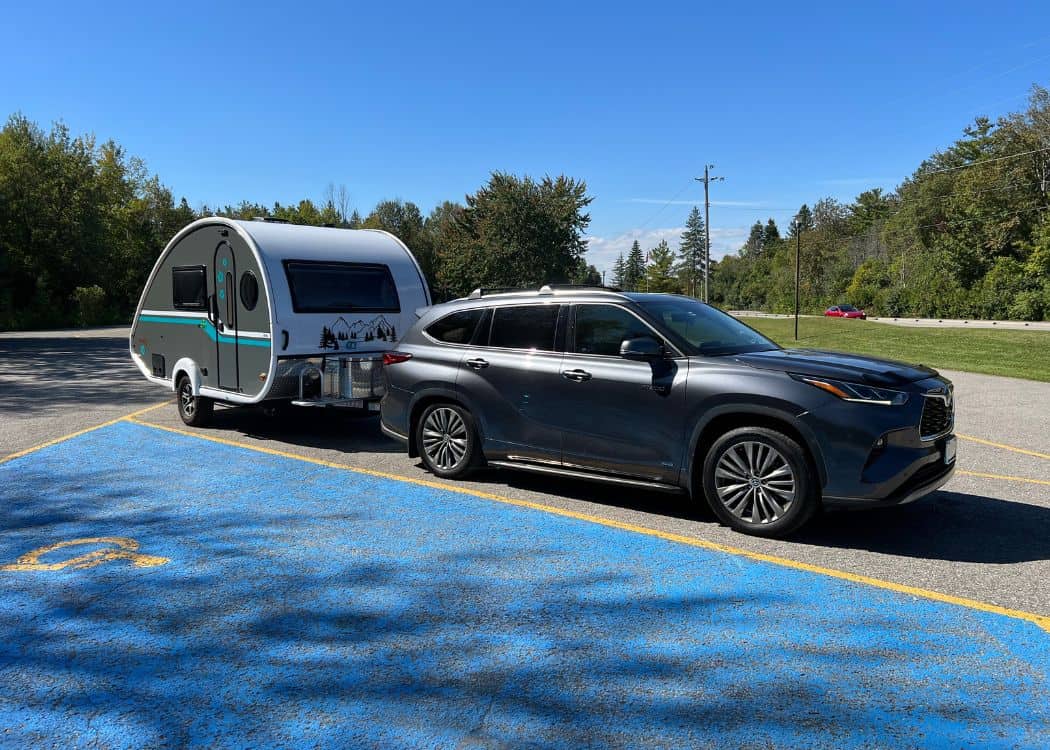
Steep grades put extra strain on your vehicle, and sharp curves can test your towing skills.
Sometimes, the longer, flatter route is the smarter choice, saving you stress and wear on your vehicle.
Next, think about the infrastructure. Not all roads are trailer-friendly.
Low-hanging branches, narrow lanes, and restrictions on trailers can turn your adventure into a headache.
Doing a bit of research beforehand, like checking out RV-friendly routes or using trailer-specific GPS settings, can save you a world of trouble.
Also, consider your stops along the way. Whether it’s for a quick break, fuel, or overnight camping, planning your stops can ensure you have plenty of space to maneuver and park your trailer.
For example, our yearly camping trip to Algonquin Park needed to be planned more carefully the last time around. We usually stop in a certain Tim Hortons for breakfast at about our half-way point.
The problem is, that the lot is really tight, and it’s usually very busy. There’s no way we would have been able to get Nellie into the lot.

Instead, we parked across the street at a gas station that had a very large lot attached. After filling up our gas tank, we made sure to ask the employees for permission to park the trailer there while we grabbed a bite to eat.
Definitely look for places known to be accommodating to trailers (like Walmart), so you don’t find yourself stuck in a tight spot.
Lastly, keep flexibility in mind. Even the best-laid plans can encounter unexpected road closures or detours.
Having a backup plan or being prepared to adjust your route on the go can keep your adventure on track, no matter what comes your way.
5. Secure Your Belongings
This may seem like a small thing in the grand scheme of things, but trust me, it will make your life easier.
There’s nothing like cleaning up a box of baking soda that exploded all over my camper after having fallen off a shelf!
Do yourself a favour, before you hit the road, take a moment to make sure that everything in and around your teardrop trailer is secure.
Loose items can become projectiles in sudden stops or sharp turns, and unsecured gear on the outside can turn into road hazards.
Inside your trailer, use built-in storage solutions to your advantage.
Many Teardrops are designed with clever compartments and spaces to keep your belongings in place.
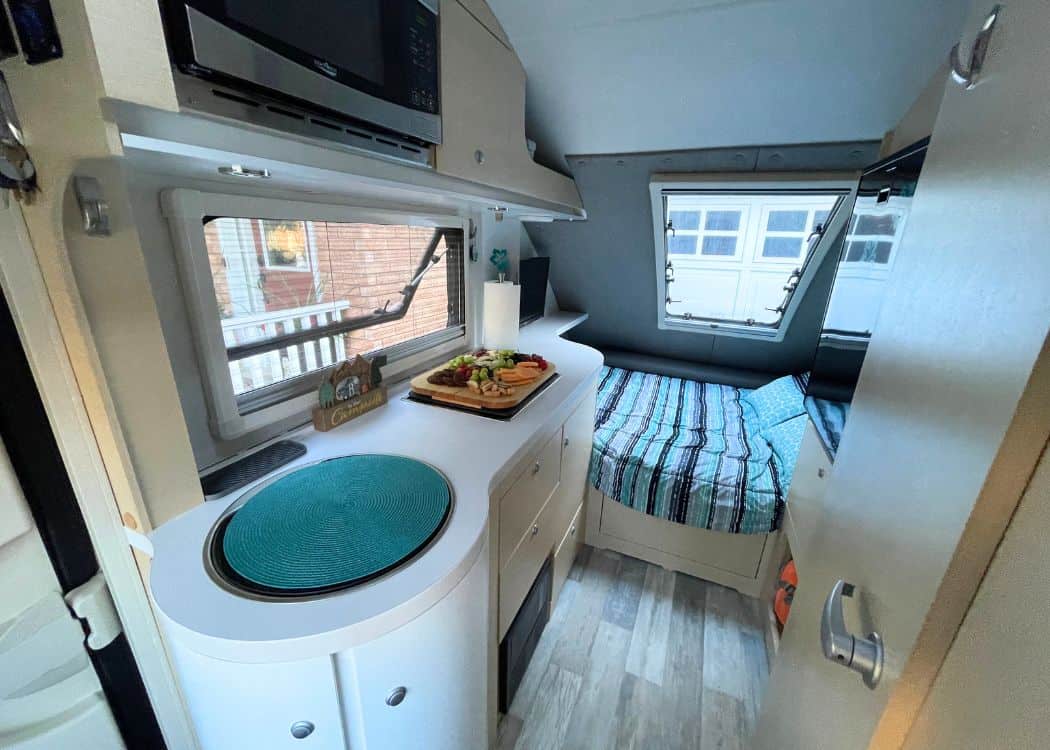
For everything else, think about using straps, nets, or even tension rods to secure items.
It can definitely be like a game of Tetris, finding the best spot for each piece, ensuring nothing is left to slide, shift, or tumble.
Outside, double-check that all cargo is tightly fastened. If you’re using a roof rack or rear carrier, make sure everything is strapped down securely.
Bikes, kayaks, or extra gear should be locked in place, not just for the integrity of your belongings but to prevent accidents.
And don’t forget the little things: doors, windows, fan vents, and even your trailer’s kitchen hatch (if it has one). Make sure that they’re closed and locked.
The last thing you want is a door swinging open mid-journey only to have your supplies scattered along the highway.
6. Slow Down
This might be the simplest piece of advice, but it’s also one of the most important: slow down.
This was also the one thing that John hammered into my head BEFORE we even bought our Teardrop.
I may or may not have a slight lead foot! That said, I certainly did not want to risk my family’s safety or our investment.
Towing a teardrop trailer isn’t a race. In fact, taking it easy on the road can make all the difference between a stressful trip and a memorable adventure.
When you’re towing, your vehicle handles differently. I noticed that right away with the Highlander (though not so much with our Tundra).

Stopping takes longer, turning requires more space, and wind or passing trucks can make your trailer sway.
By slowing down, you give yourself more time to react to road conditions, traffic, and any unexpected events.
Speed limits are set for a reason, and when you’re towing, it’s wise to stay at or below them.
On highways, the right lane can be your best friend, allowing faster traffic to pass while you maintain a steady, comfortable pace.
Lastly, keep in mind that most trailer tires are not rated for high speeds. Plus, it’s easier on your vehicle and can help improve your fuel efficiency if you stay at a slower speed.
7. Keep an Eye on Your Mirrors
While on the road with your teardrop trailer hitched up, your mirrors become your best friends.
Keeping a constant eye on them not only helps you monitor the trailer’s behaviour but also ensures that you have a full view of your surroundings.
First off, make sure your side mirrors are properly adjusted before you start your journey. You’ll want a clear view of both sides of the trailer and the road behind you.
This might mean investing in extended mirrors if your current setup doesn’t give you the visibility you need.
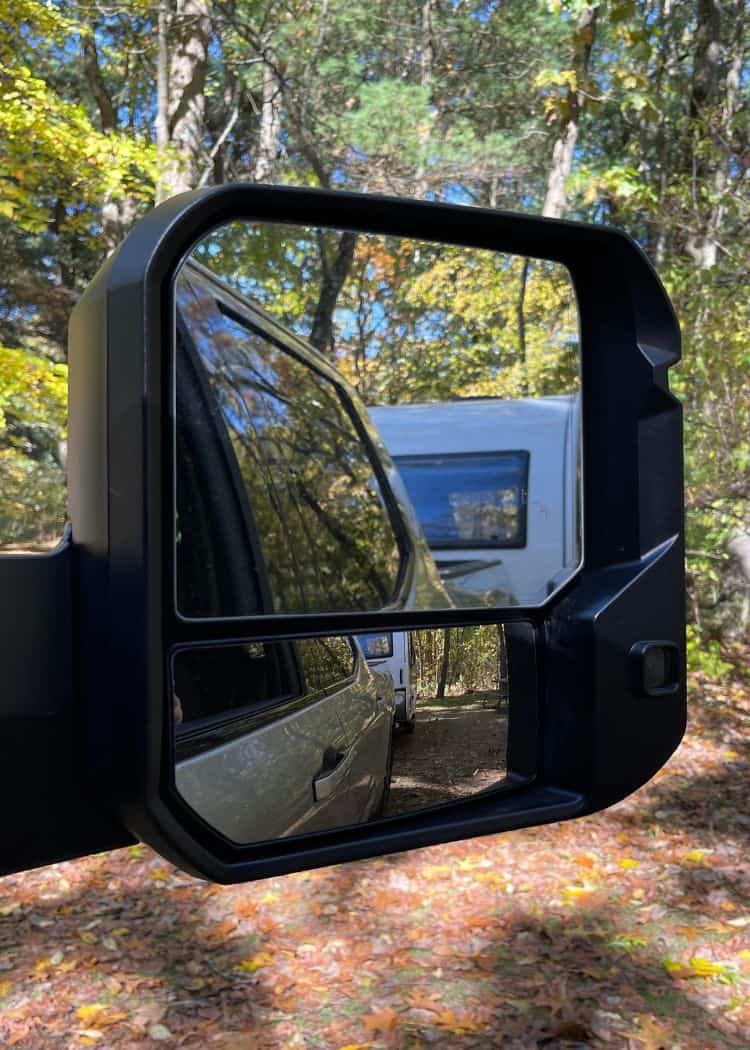
Trust me when I say, these can be a game changer. The mirrors on our Tundra extend making it especially easy when it comes to changing lanes or navigating through tighter spots.
Regularly glancing at your mirrors also helps you keep tabs on how your trailer is handling.
If you notice it starting to sway or if something seems off, you can adjust your driving accordingly.
It’s also helps for spotting vehicles that may be trying to overtake you, giving you the chance to make lane changes safely and with plenty of notice.
Remember, your rearview mirror is pretty useless with a trailer in tow. So those side mirrors really do become your eyes on the world behind you.
Upgrade Your Side-View Mirrors
Speaking of keeping an eye on your mirrors, let’s not overlook the significant benefits of upgrading your side-view mirrors for towing.
Standard mirrors might do the job for everyday driving. But when you’re towing a teardrop trailer, the extra width and blind spots mean you need a better view of the world behind you.
Upgraded side-view mirrors, especially those designed for towing, extend further out from your vehicle, providing a much broader view of the road and your trailer.
With these mirrors, you can see the entire length of your trailer and keep an eye on traffic that’s overtaking or lingering in your blind spots.
There are a few options when it comes to upgrading.
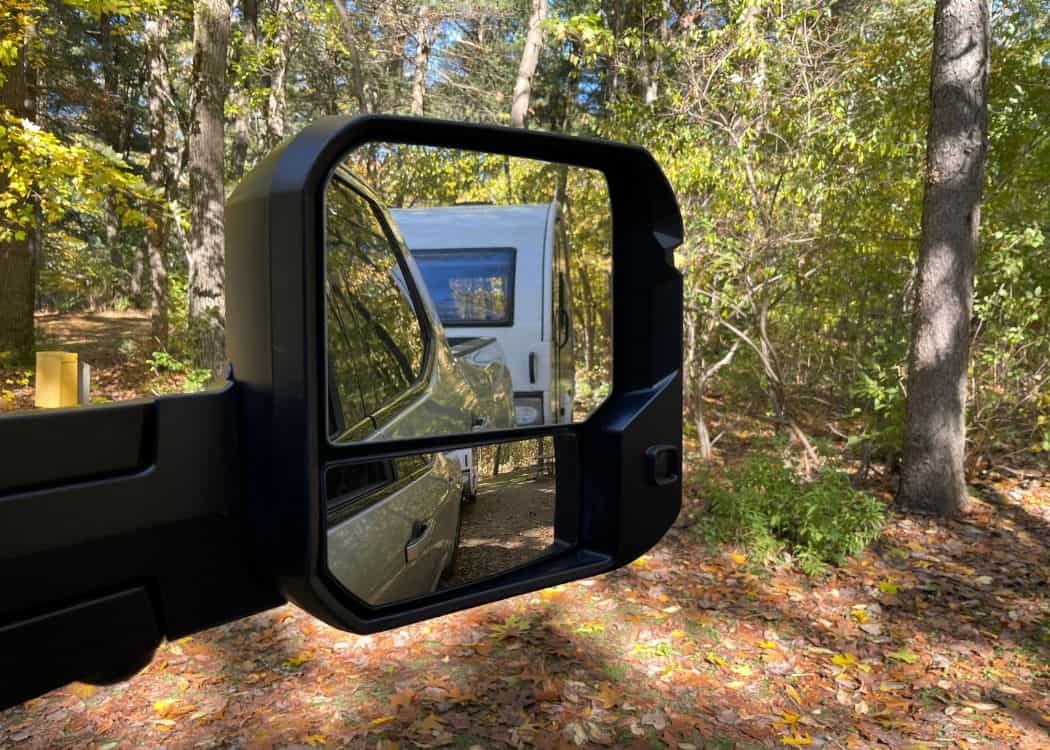
There are permanent replacement mirrors that offer wider views and features like electronic adjustment and heating. Or, you could go with temporary towing mirrors that clip on or strap to your existing mirrors.
The temporary ones are a great choice if you only tow occasionally, as they can be easily removed when not needed.
Whichever option you choose, make sure your new mirrors provide a clear, unobstructed view both along the sides of your trailer and behind it.
Adjust them so you can see just beyond the edges of your trailer.
This setup will help you navigate more confidently, whether you’re changing lanes, merging onto highways, or backing into a campsite.
8. Always Signal Early
When you’re on the road with your teardrop trailer, communication with other drivers becomes more important than ever.
That’s where signalling comes into play, not just as a courtesy, but as a necessary part of safe towing.
Signal early. It’s a simple move that can significantly enhance road safety for everyone involved.
Signalling early gives other drivers more time to react to your intentions, whether you’re planning to change lanes, turn, or even slow down.
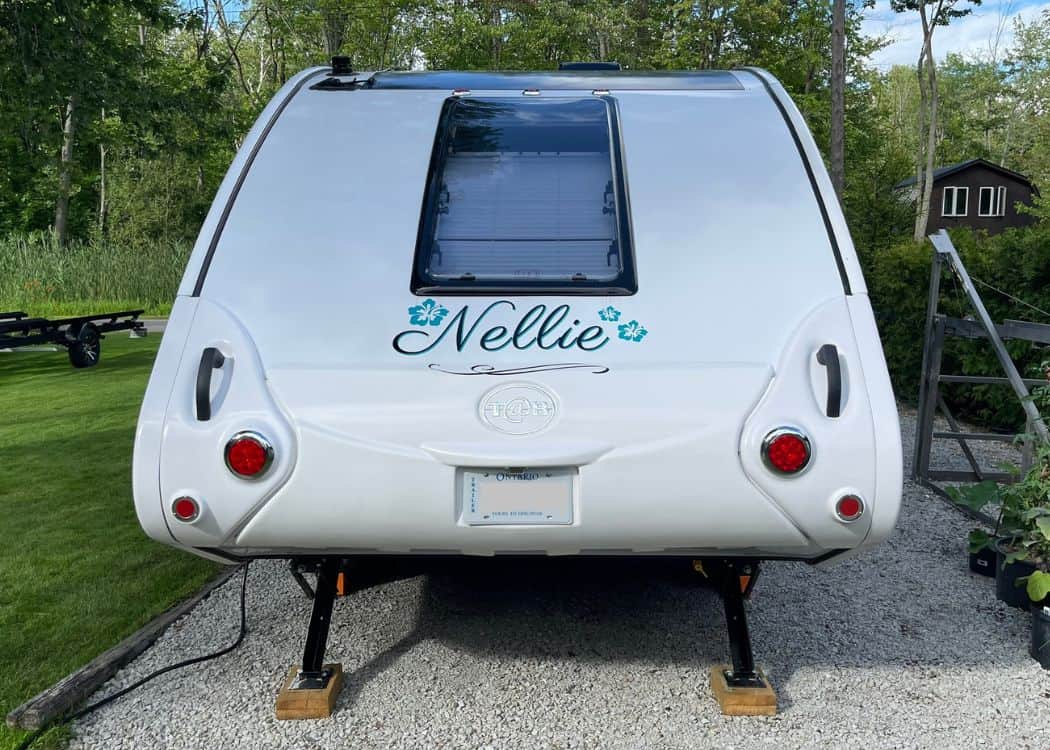
With a trailer in tow, your actions take longer and require more space.
Early signals help paint a clear picture for drivers around you, reducing the chances of misunderstandings or close calls.
This practice is especially important on highways or in heavy traffic, where speed and space are at a premium.
An early signal can be the heads-up that lets another driver adjust their speed or position to accommodate your maneuver safely.
9. Brake Earlier
When you’re towing a teardrop trailer, one of the key adjustments to your driving style should be to start braking earlier than you normally would.
This isn’t just a suggestion—it’s a necessity for safe towing.
Remember, you’ve got extra weight behind you, which means your stopping distance increases.

Braking early gives you a buffer, and a bit of extra space and time to come to a complete stop without any drama (aka road rage) from drivers behind you.
This practice is especially important in wet or slippery conditions, where stopping distances can be even longer.
Plus, it helps reduce wear and tear on both your vehicle’s and your trailer’s brakes, making for a smoother, safer ride.
10. Make Wider Turns
Navigating turns with a teardrop trailer in tow isn’t quite the same as driving solo.
That extra length behind you means turns need a bit more care and, yes, a bit more space.
Making wider turns is essential to ensure your trailer clears the corner without hopping over curbs or clipping objects.
Keep in mind, that when you turn with a trailer, it follows a tighter arc than your vehicle.
This means if you cut a corner too closely, your trailer is at risk of hitting the curb or anything else that’s close to the edge of the road.
To avoid this, you’ll want to start your turn a bit later than usual.
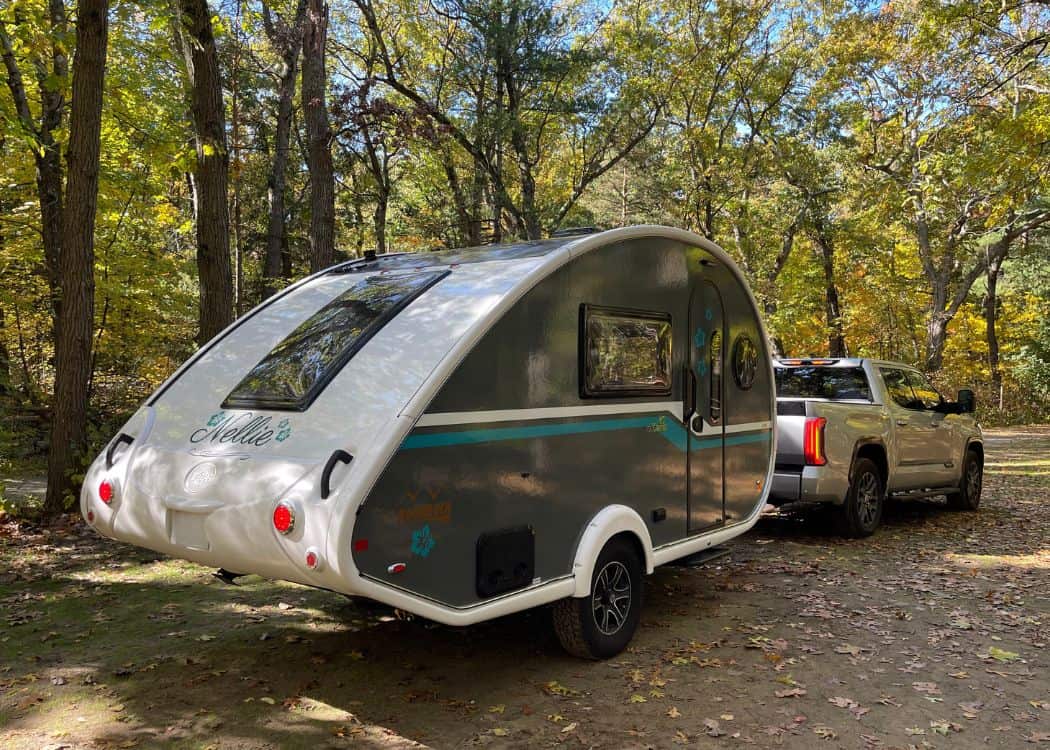
Pull forward into the intersection just a bit more, or if you’re making a turn onto another street, aim to start turning a little after you normally would.
It might feel a bit odd at first, especially if you’re used to making tighter turns. But with practice, it becomes second nature.
And here’s a pro tip: use your mirrors to watch how your trailer navigates the turn. That, or do what we did, and have some make a video of you turning right.
This will help you see how much extra space your specific trailer needs.
In our case, our TAB 400 follows our tow vehicle pretty closely. We only need to make a slightly wider turn than normal for Nellie to follow us without hitting the curb.
11. Practice Reversing Your Teardrop Trailer
I once heard someone say, that reversing a trailer can feel like you’re being asked to solve a puzzle backward and in heels! Ha!
It’s definitely tricky, and may even feel really intimidating at first. But practice makes perfect.
First off, find a safe, open space to practice, like an empty parking lot.
The goal here is to create a stress-free environment where you can get a feel for how your trailer moves in reverse without the worry of traffic or obstacles.
This is exactly what John and I did on our way home from picking up Nellie at the dealership.

We brought along some pylons, and spent several hours practicing how to reverse our Teardrop in an empty box-store parking lot near home.
The key to mastering this skill? Small, gentle movements. Your steering inputs will be amplified through the trailer, so a little goes a long way.
Remember, when you want the trailer to go left, steer right, and vice versa. It’s counterintuitive, which is why practice is important.
Don’t rush. Take your time, make adjustments slowly, and if you need to, pull forward to straighten out and try again. It’s not a race, and there’s no penalty for taking it slow.
We have gotten frustrated several times when trying to park Nellie. And sometimes it was just easier to start over.
Just a word of advice, getting into an argument with your significant other over parking the camper is a right of passage.
Expect it, laugh about it later, and just park the trailer!
Think in Opposites When Reversing
One technique that really helped me to wrap my mind around reversing the trailer, was to place my hand at the bottom of the steering wheel.
In this position, moving your hand in the direction you want the trailer to go makes the process a bit more intuitive.
Want the trailer to head toward the driver’s side? Move your hand (and thus, the wheel) to the left, and the trailer will follow.
The more you practice, the better you’ll get at understanding how your trailer moves in reverse, and the more natural it will feel to think in opposites.
Remember, reversing a trailer is a skill, and like any skill, it improves with time and practice.
So, take it slow, stay patient with yourself, and before you know it, you’ll be reversing your teardrop trailer like a pro.
Enlist the Help of Spotters
When it comes to reversing your teardrop trailer, two (or more) sets of eyes are better than one.
That’s where spotters come in—a friend, family member, or even a kind fellow camper can play this important role.
Spotters can see angles and distances that you can’t see from the driver’s seat. They can relay the directions through hand signals or a simple walkie-talkie communication system.
John and I actually just use our cell phones. We call each other, and I put him on speaker as I am reversing the trailer.
Remember, clear communication is key.
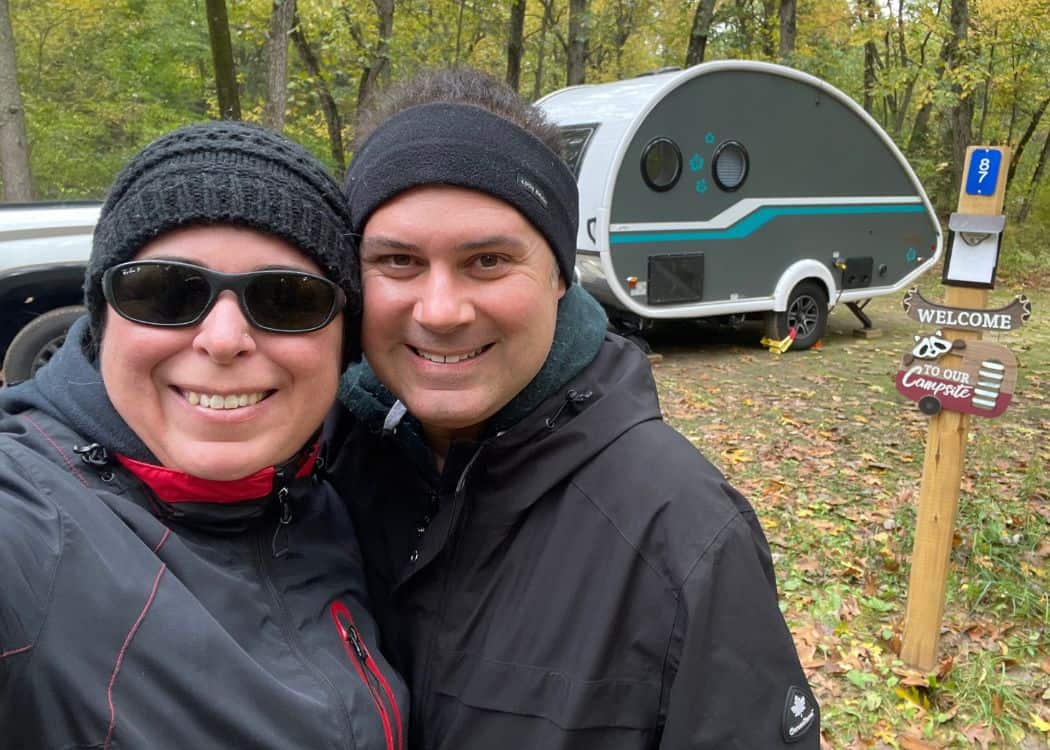
One really important piece of advice is to make sure that your spotter stands where you can see them in your mirrors, ideally to the side and slightly behind the trailer.
This position allows them to give you the best guidance while keeping a safe distance from the moving vehicle.
Relying on a spotter reduces the stress of backing into a tight spot but also significantly lowers the risk of bumps, scrapes, or more serious accidents.
12. Park in the Boonies
When you’re on the road with your teardrop trailer, stopping to pick up supplies, or a bite to eat, is part of the adventure.
But here’s a pro tip that can make those stops smoother: park in the boonies, meaning, choose parking spots further away from the entrance.
It might seem silly at first—after all, who doesn’t love snagging a spot right by the door? But when you’re towing a trailer, the advantages of parking further out are hard to ignore.
First off, spaces at the back of the lot are typically less crowded, giving you more room to maneuver your trailer without the stress of tight spots or heavy pedestrian traffic.
This is especially handy for those who are still getting used to the added length and weight of towing.

Plus, the risk of someone parking too close and limiting your ability to comfortably hook up or access your trailer significantly decreases.
Another big plus of parking in a more remote location is the ease of making an exit. When you’re ready to hit the road again, you’ll find it much simpler to pull out from a spot with fewer cars around.
No tricky navigation is needed, just a straightforward departure. This is always a win after a long day of travel or when you’re eager to get to your next destination.
Parking further away also has a subtle benefit—it’s a little extra exercise, adding some steps to your day. It’s a small thing, but it can be a nice break after hours on the road.
13. Keep Up with Your Hitch Maintenance
Your hitch is the critical link between your family car and your teardrop trailer. That’s why it’s pretty important to keep up with hitch maintenance.
Regular maintenance ensures this connection remains strong, safe, and reliable, no matter where your adventures take you.
First things first, always check your hitch before and after each trip. Look for signs of wear and tear, such as rust, cracks, or any other damage.
These can compromise the hitch’s integrity and your safety on the road. A quick visual inspection can catch small issues before they become big problems.
Lubrication is your hitch’s best friend. Keeping the moving parts of your hitch well-lubricated reduces friction, prevents rust, and ensures everything operates smoothly.
Pay special attention to the hitch ball and coupler, as these areas bear the brunt of the work and are most susceptible to wear.

Don’t forget about the bolts and nuts. They should be tightened to the manufacturer’s specifications.
Over time, vibrations from the road can loosen these connections, so checking and tightening them regularly is crucial.
If your hitch includes electrical components for trailer lights and brakes, keep those connections clean and protected.
Corrosion can interfere with the signals, leading to unsafe towing conditions.
A bit of electrical contact cleaner and some dielectric grease can go a long way in keeping everything in top working order.
Lastly, consider a hitch cover when not in use. It’s a simple and effective way to protect the hitch from the elements, preventing rust and debris accumulation.
14. Check Your Trailer Often
Regularly checking your teardrop trailer is a necessary practice for ensuring ongoing safety and reliability throughout your journey.
Whether you’re on a weekend getaway or heading out on a longer road trip, making these checks a habit can save you from unexpected issues down the line.
Before Every Trip
- Tires: Inspect for wear, and cracks, and ensure they’re inflated to the recommended pressure. Don’t forget the spare!
- Lights: Test all lights—brake, turn signals, and running lights—for proper operation.
- Hitch: Double-check the hitch connection, ensuring it’s secure and the locking mechanism is fully engaged.
- Brakes: If your Teardrop is equipped with trailer brakes, verify they’re functioning correctly.
- Batteries: For travel trailers with onboard batteries, check the charge and ensure connections are clean and tight.

During Your Trip
- Visual Inspections: At each stop, take a moment to walk around your trailer. Look for any signs of new damage, loose components, or anything unusual.
- Tire Pressure: Changes in elevation and temperature can affect tire pressure. A quick check can prevent tire issues before they arise.
- Securing Devices: Make sure that all items, inside and out, remain securely fastened. Road vibrations can loosen straps and clasps over time.
Post-Trip
- Clean and Inspect: After your adventure, give your trailer a thorough cleaning. This is the perfect time to inspect for any damage or wear that may have occurred during your trip.
- Storage Prep: If you’re storing your trailer for an extended period, protect it from the elements as much as possible. Covering your trailer or storing it under a canopy can prevent weather-related wear.
15. Get Appropriate Insurance
Getting the right insurance for your teardrop trailer is as important as packing your essentials for the journey.
Appropriate insurance coverage protects you against unexpected events, from road accidents to natural disasters, and even theft.

Understand Your Needs
Start by assessing how you’ll use your teardrop trailer.
Are you planning cross-country adventures, or will you be sticking closer to home? Will your trailer be parked for extended periods, or will it see the road year-round?
Your usage can dictate the type of coverage you need.
Coverage Options
- Liability Insurance: This is often a legal requirement and covers damage or injuries to others caused by your trailer when it’s being towed.
- Comprehensive Coverage: Protects against non-collision-related damage to your trailer, such as weather damage, theft, and vandalism.
- Collision Coverage: Covers damage to your trailer resulting from collisions, regardless of who is at fault.
- Contents Coverage: If you’re carrying valuable gear or personal items in your trailer, consider coverage that protects against loss or damage to these items.
Shop Around
Insurance policies and premiums can vary widely, so it’s worth shopping around.
Compare quotes from different providers, paying close attention to what’s included in each policy.
Don’t hesitate to ask for advice on coverage options specific to your needs and lifestyle.
Ask About Discounts
Many insurance companies offer discounts for various reasons—everything from storing your trailer securely to being a member of RV or travel associations.
Always ask about potential discounts; you might be surprised at what’s available.
Review Regularly
Your insurance needs can change as your travel habits evolve, or as you add accessories and upgrades to your trailer.
Make it a habit to review your policy annually to ensure it still meets your needs and offers the best value.
Towing a Teardrop Trailer – FAQs
No. Towing a teardrop trailer is generally easy, thanks to their lightweight design and compact size, making them suitable for beginners.
Most mid-sized cars, SUVs, and trucks can tow a teardrop trailer, as they are designed to be lightweight and easily manageable.
It’s recommended to drive no faster than 90-100 km/h (55-65 mph) when towing a teardrop trailer to maintain safety and control.
Towing a travel trailer typically reduces fuel efficiency by 2-5 miles per gallon, depending on the trailer’s size and weight.
No, it is unsafe and as well as illegal to be inside a camper trailer while it is being towed.

Final Thoughts
Wrapping up, making sure that your teardrop trailer journey is as smooth and enjoyable as possible comes down to preparation and awareness.
From checking your vehicle’s towing capacity to regular maintenance checks, and securing the right insurance, each step is vital.
I’ve shared these tips to help you navigate the challenges of towing a teardrop trailer, especially if like us, you are a first-time trailer owner.
After all, you know what they say – “The joy is in the journey as much as the destination”.
Pin This Post for Later!
Related Posts:
- How to Winterize Your Teardrop Trailer in 10 Easy Steps (With FREE Checklist)
- The Ultimate Guide to Camping with Your Dog
- Best RV Campsite Setup Ideas for Your Teardrop Trailer
- Ultimate RV Departure Checklist for Teardrop Trailers
- Ultimate RV Arrival Setup Checklist for Teardrop Trailers
- How to Level a Travel Trailer & Why It’s So Important
- Top 15 Tips for Towing a Teardrop Trailer with Your Family Car
- How to Dewinterize Your Teardrop Trailer
- How To Use an RV Dump Station for the First Time
- How to Book an Ontario Provincial Park Campsite – An Ultimate Guide
- How to Book a Parks Canada Campsite – An Ultimate Guide
- Camping with A Teardrop Trailer – How to Plan the Perfect Trip
